Every musician benefits from opportunities to share their work, hear new perspectives, and learn alongside others.
A Master Class gives students the chance to do all three.
At Chambers Music Studio, a Master Class is a supportive educational experience where students may perform a piece they are currently studying and receive focused coaching in a group setting.
Students may choose to perform or simply attend as observers.
Both experiences offer meaningful opportunities for growth.
Musicians from Bexley, Worthington, Upper Arlington, Gahanna, New Albany, Dublin, Westerville, and communities throughout Columbus can learn from the coaching, performances, and musical conversations that take place during these welcoming events.
Master Classes are designed for musicians at every stage of their journey. The goal is not to create pressure or competition. It is to help students build confidence, strengthen performance skills, improve musical expression, and develop a deeper understanding of their instrument.
Students can explore the full range of music lessons and programs at Chambers to see how Master Classes fit into their broader musical development.
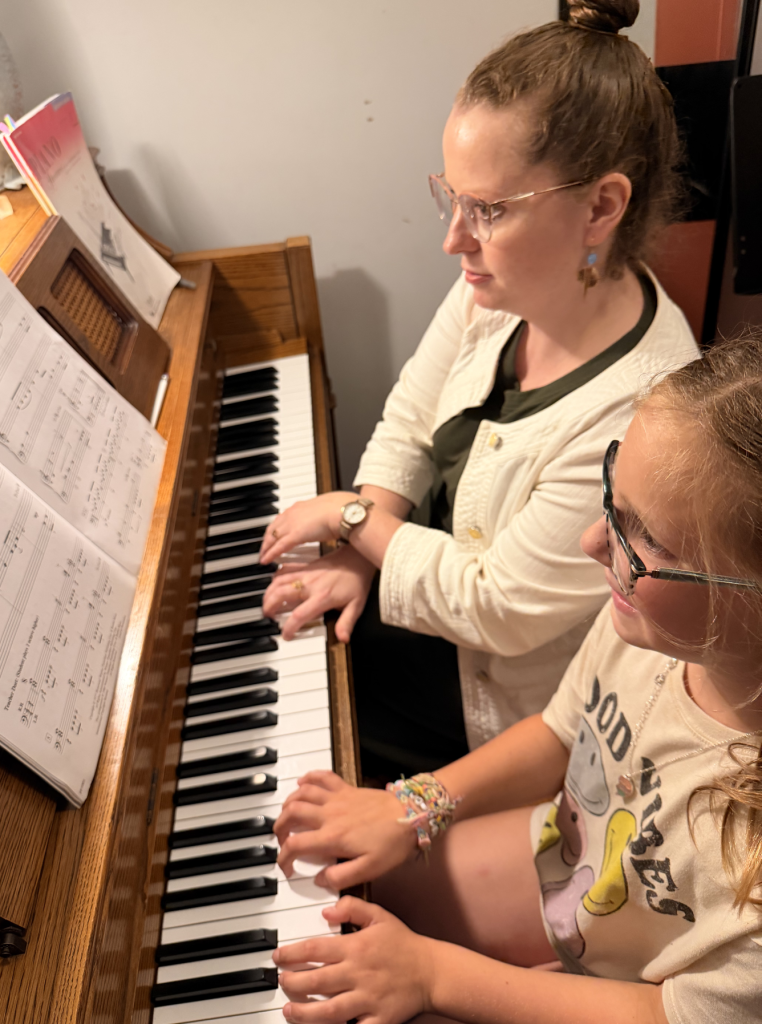
What Is a Music Master Class?
A Master Class brings students together in a shared learning environment.
During the event, participating students may perform music they are currently preparing in lessons. An instructor, guest musician, or professional coach then offers guidance designed to help the student strengthen the piece and deepen their understanding of the music.
Coaching may focus on areas such as:
- Musical expression
- Tone quality
- Rhythm and accuracy
- Technique
- Phrasing
- Dynamics
- Posture and physical coordination
- Interpretation
- Stage presence
- Performance confidence
Unlike a traditional private lesson, the coaching takes place in front of a small group.
This allows everyone in the room to learn from the ideas being discussed.
One student may receive direct guidance, but the entire group benefits from hearing the feedback, watching the process, and considering how similar ideas may apply to their own music.
Students who enjoy collaborative learning may also benefit from ensemble classes, where they can strengthen listening, timing, teamwork, and musical communication.
Why Master Classes Are Part of Life at Chambers
At Chambers Music Studio, we believe that learning does not happen only between one teacher and one student.
Some of the most meaningful musical growth happens when students watch others solve problems, ask thoughtful questions, receive coaching, and discover new ways of thinking.
That is why Master Classes are part of Life at Chambers.
Students do not just learn from their own performance. They learn by listening, observing, encouraging others, and realizing that every musician, from beginner to professional, is continually growing.
These experiences teach students how to receive feedback with confidence, communicate respectfully, support their peers, and remain curious throughout life.
Whether a student is eventually leading a classroom discussion, collaborating with coworkers, coaching a team, or presenting an idea to colleagues, the ability to learn in community is one of the most valuable skills they can develop.
Music simply gives us one of the best places to practice it.
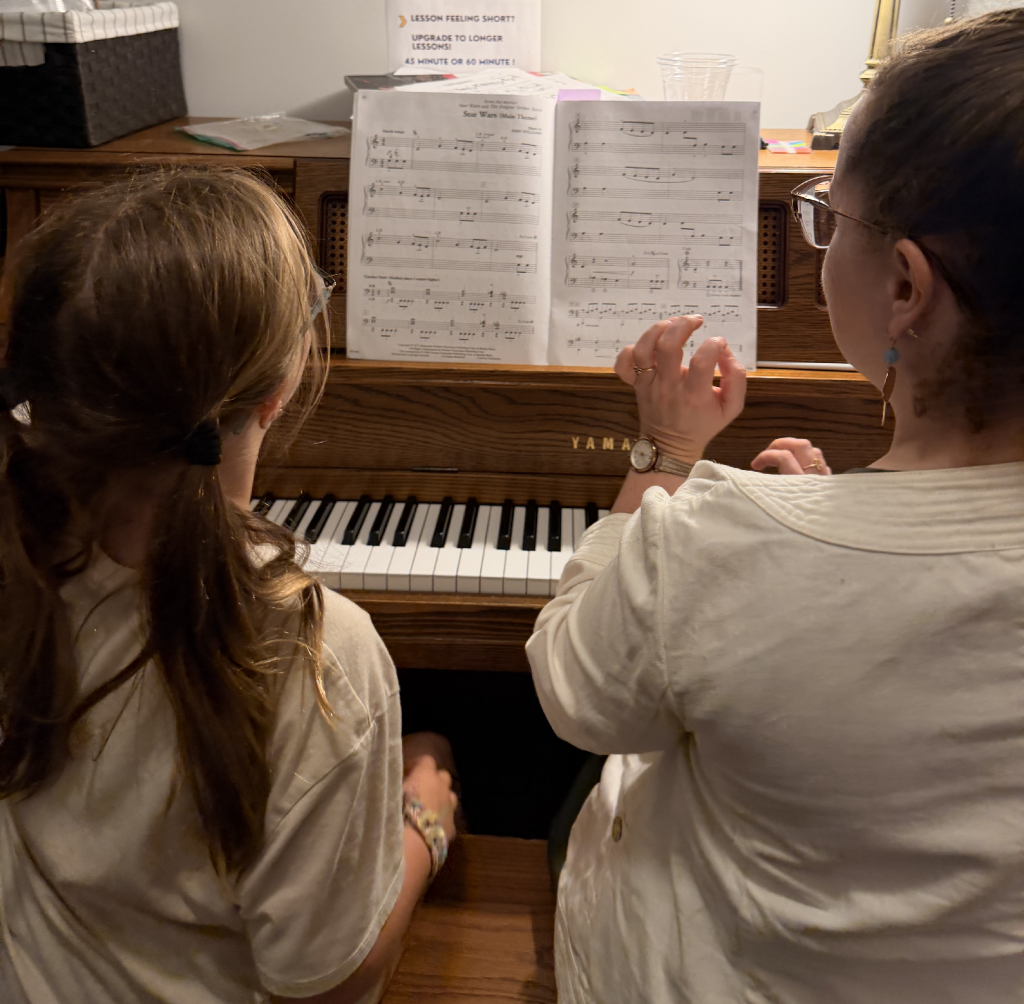
A Supportive Place to Perform
Performing in front of others can feel intimidating.
Students may worry about making mistakes, forgetting part of the music, or being compared with more experienced musicians.
A Chambers Master Class is intentionally designed to feel encouraging rather than judgmental.
Students do not need to present a perfectly polished piece.
In fact, bringing music that is still in progress can make the coaching especially valuable.
The purpose is to explore questions such as:
- What is already working well?
- Where could the musical idea become clearer?
- How can the student communicate more confidently?
- What technical adjustment may make the passage easier?
- How can the student shape the music more expressively?
- What should the student focus on next?
The performer is not expected to have every answer.
The Master Class creates a place where questions, experimentation, and growth are welcomed.
Why Performing Music in Progress Matters
Students often believe they should wait until a piece is completely finished before sharing it.
A Master Class offers a different perspective.
Performing music while it is still developing allows students to receive useful guidance before their habits and interpretations become fixed.
A coach may help a student recognize:
- A more effective way to practice a difficult section
- A technical habit that is limiting the sound
- A rhythmic pattern that needs greater clarity
- An opportunity for stronger expression
- A different way to shape a phrase
- A more confident approach to the beginning or ending
- A musical idea the student has not yet considered
This feedback can give students a clearer direction when they return to their lessons and practice.
Rather than viewing the piece as something that must already be complete, students begin to understand music as a process of continued discovery.
Students can continue developing those ideas through personalized music lessons at Chambers.
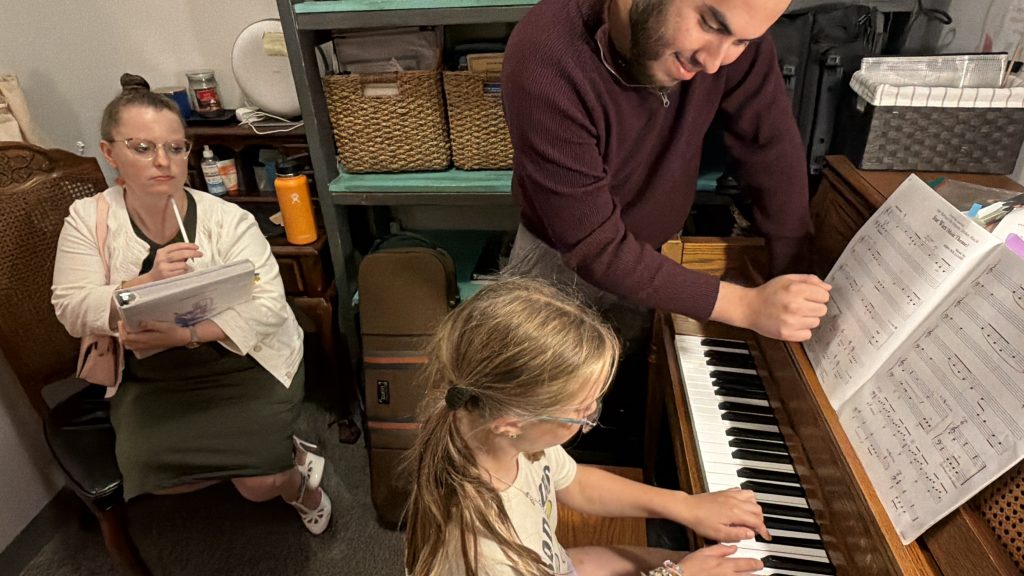
Building Confidence Through Experience
Confidence develops through preparation, repetition, and experience.
A student may feel nervous before playing in a Master Class, particularly if they have not performed in front of peers before.
Completing the experience can show them that they are capable of sharing their music, receiving feedback, and continuing to grow.
Students practice how to:
- Begin a performance with focus
- Share music in front of others
- Continue after a mistake
- Listen to feedback without becoming discouraged
- Try a new idea in the moment
- Perform the same passage more than once
- Recognize their strengths
- Identify a meaningful next step
Confidence does not require a student to feel completely fearless.
It can mean performing even when they feel nervous and discovering that the experience is manageable, supportive, and worthwhile.
Each Master Class can make the next performance feel more familiar.
Strengthening Performance Skills
Learning to play or sing a piece is only one part of becoming a musician.
Students also need opportunities to practice presenting their music to others.
A Master Class may help students strengthen performance skills such as:
- Preparing materials independently
- Walking into the performance space
- Introducing a piece
- Finding the starting note or tempo
- Maintaining focus
- Communicating with an audience
- Recovering after an unexpected moment
- Ending confidently
- Responding to applause
- Reflecting on the experience afterward
These details help students become more comfortable and independent performers.
They are especially valuable for students preparing for recitals, assessments, festivals, auditions, showcases, or other educational events.
Students in Piano Keys may begin developing these skills through independent playing, while students in more advanced lessons can refine interpretation, presentation, and stage presence.
Improving Musical Expression
Musical accuracy matters, but music is more than playing the correct notes.
Expression gives the music character, meaning, and emotional direction.
During a Master Class, a coach may help students explore:
- The mood or story behind the piece
- How dynamics shape the music
- Where a phrase is moving
- How articulation changes the character
- How tempo affects expression
- When the music should feel calm, energetic, playful, or dramatic
- How the performer can communicate more intentionally
- How personal interpretation can remain true to the music
A student may be asked to play a section in more than one way and listen for the difference.
They may experiment with a stronger contrast, a different tone, or a clearer phrase ending.
This process helps students move beyond simply reproducing notes.
They begin making thoughtful musical choices.
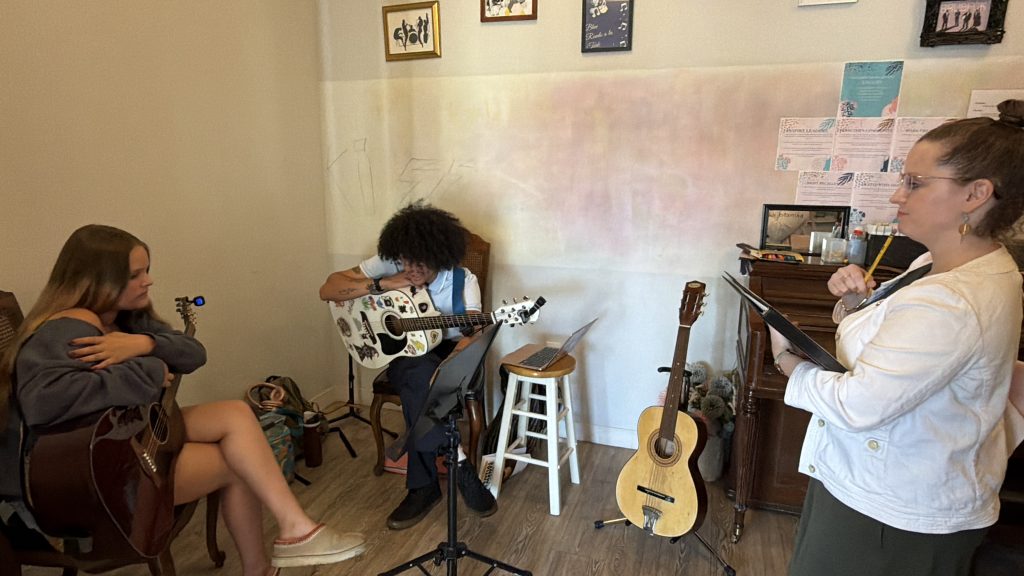
Developing a Deeper Understanding of the Instrument
Focused coaching can also help students better understand how their instrument or voice works.
A pianist may explore how arm weight, posture, or pedaling affects the sound.
A singer may learn how breath, resonance, and physical alignment support a phrase.
A string player may examine bow placement, tone production, or shifting.
A guitarist may work on hand position, articulation, or sound balance.
A wind or brass student may explore breath support, tone, embouchure, or phrasing.
A drummer may work on coordination, rhythmic clarity, balance, or musical dynamics.
The exact coaching will depend on the student, instrument, piece, and current stage of learning.
The purpose is not simply to correct a single moment.
It is to give the student a better understanding of how musical and physical choices shape the result.
That understanding can continue influencing the student’s work long after the event ends.
Families exploring instruments and lesson options can review the full Chambers lessons page to learn more about available areas of study.
Learning Through Observation
Students do not have to perform to benefit from a Master Class.
Observers play an important role in the learning environment.
By listening to other students perform and receive coaching, observers may notice musical ideas they can apply to their own work.
They may learn about:
- Practice strategies
- Stage presence
- Performance preparation
- Musical expression
- Tone and technique
- Recovering after mistakes
- Receiving feedback
- Different instruments and musical styles
- Common challenges experienced by other musicians
Observation can be especially valuable for students who are not yet comfortable performing in a group.
They can experience the event, become familiar with the format, and see that the atmosphere is educational and supportive.
A student who attends as an observer may feel ready to perform at a future Master Class.
Every Student Learns From Every Performance
One of the strengths of a group learning experience is that a single performance can create many different lessons.
A coach may help one student strengthen rhythm, but everyone in the room can consider how steady their own rhythm feels.
Another student may work on stage presence, encouraging observers to think about how they begin and end their own performances.
A conversation about phrasing may apply to singers, pianists, guitarists, and instrumentalists in different ways.
Students learn that musicians often face similar challenges, even when they play different instruments or study different styles.
This creates an educational community rather than a competitive environment.
Students are encouraged to listen carefully, support one another, and recognize the courage involved in sharing music.
Receiving Constructive Feedback
Learning how to receive feedback is an important part of becoming a musician.
Students may sometimes interpret a suggestion as evidence that they performed poorly.
A Master Class helps reframe feedback as a tool for discovery.
Constructive coaching should help students understand:
- What they are already doing successfully
- What musical quality deserves to be strengthened
- Which adjustment may create improvement
- How to practice the new idea
- What goal should come next
Students may be asked to try a suggestion immediately.
This allows them to hear or feel the difference and recognize that feedback can create new possibilities.
Receiving coaching in a supportive setting helps students build resilience, curiosity, and openness.
These qualities are valuable in music, school, work, and other areas of life.
Trying New Ideas in Real Time
One of the most engaging parts of a Master Class is watching musical change happen in the room.
A student may perform a passage one way, receive a suggestion, and then try it again.
The difference may be subtle or dramatic.
The student and observers can hear how a new technical or expressive choice changes the performance.
This process teaches students that musical growth does not always require waiting weeks to see progress.
Sometimes one clear idea can immediately change how a student understands a piece.
It also shows students that experimentation is part of learning.
They are allowed to try something, listen, adjust, and try again.
A Welcoming Experience for Every Stage
Master Classes are not only for advanced students.
Beginning, intermediate, and experienced musicians can all benefit from focused coaching and observation.
A beginner may work on:
- Keeping a steady beat
- Playing with a clear tone
- Beginning independently
- Completing a short piece
- Feeling comfortable in front of others
An intermediate student may focus on:
- Technique
- Phrasing
- Dynamics
- Confidence
- Interpretation
An advanced student may explore:
- Stylistic details
- Complex musical decisions
- Refined tone
- Advanced performance preparation
- Deeper interpretation
Each student receives guidance appropriate to their current level.
The goal is not to compare a beginning musician with an advanced performer.
It is to help every participant take a meaningful next step.
For younger students, that journey may begin in Mommy & Me Music Time or Jam Band before progressing into Piano Keys, private lessons, ensembles, performances, and Master Classes.
Connecting With Other Musicians
Private lessons provide focused, personalized instruction, but students also benefit from knowing they are part of a larger musical community.
Master Classes bring students together in a shared educational setting.
Musicians from Upper Arlington, Gahanna, New Albany, Dublin, Westerville, Grandview Heights, and throughout Central Ohio may have the opportunity to listen, learn, and support one another.
Students may meet peers who play the same instrument or discover music they have never heard before.
They may see another student manage nervousness, work through a difficult section, or respond positively to feedback.
These experiences help students understand that musical growth is shared.
Every musician continues learning.
Students who enjoy making music with others can also explore Chambers ensemble opportunities.
Preparing for Performances and Educational Events
Master Classes can be especially useful for students preparing for upcoming events.
A student may bring music they are developing for:
- The Life at Chambers Festival
- Landmark Achievement
- A student recital
- An adult Music Showcase
- An audition
- A school performance
- An ensemble concert
- A personal musical goal
The group setting gives students another opportunity to practice performing before the main event.
They can receive feedback on both the music and the presentation, helping them return to lessons with a clearer plan.
How Students Can Prepare for a Master Class
Students do not need to bring a perfect performance.
They should arrive ready to share, listen, experiment, and learn.
Preparation may include:
- Selecting a piece with the teacher
- Practicing a complete run-through
- Identifying a question or challenging section
- Bringing the necessary music and materials
- Preparing the instrument
- Reviewing the beginning and ending
- Practicing a short introduction
- Thinking about a personal goal
- Remaining open to trying new ideas
Teachers can help students determine whether performing or observing is the best choice for that particular event.
Both options are meaningful.
Families who are new to Chambers or unsure which program best fits their student can begin through the Get Started process.
How Observers Can Participate
Observers are encouraged to listen actively and respectfully.
They may consider questions such as:
- What did the performer communicate well?
- What changed after the coaching?
- Which idea could apply to my own music?
- How did the student respond to feedback?
- What did I notice about tone, rhythm, expression, or posture?
- What would I like to try during my next lesson?
Observers should support performers by remaining attentive, avoiding distractions, and recognizing the courage it takes to perform.
A Master Class works best when everyone contributes to a welcoming learning environment.
A Meaningful Part of Life at Chambers
At Chambers Music Studio, education extends beyond the weekly lesson.
Events such as Master Classes give students opportunities to apply what they are learning, receive new perspectives, connect with other musicians, and develop greater independence.
A Master Class may help students:
- Build performance confidence
- Strengthen technique
- Improve musical expression
- Receive constructive coaching
- Practice responding to feedback
- Learn through observation
- Connect with fellow musicians
- Prepare for future performances
- Develop a deeper understanding of music
- Recognize that growth is an ongoing process
These experiences support both musical and personal development.
Students learn how to prepare, communicate, listen, adjust, and continue growing.
Master Classes at Chambers Music Studio
Chambers Music Studio Master Classes are designed to be educational, encouraging, and welcoming for musicians at every stage of their journey.
Students may choose to perform a piece they are currently studying and receive coaching in a supportive group setting.
Students who are not ready to perform may attend as observers and learn from the coaching and musical conversations.
The structure of each event may vary based on the participating students, instruments, teachers, or guest musicians.
What remains consistent is the opportunity to learn in community.
Students from Bexley, Worthington, Upper Arlington, New Albany, Gahanna, Dublin, Westerville, Reynoldsburg, Pickerington, and communities throughout Columbus are invited to participate in this meaningful educational experience.
Visit Chambers Music Studio
Chambers Music Studio proudly serves families throughout Columbus, Ohio, with convenient locations in Bexley, Worthington, and Columbus.
Bexley Music Classes
Families seeking music classes near Bexley can learn more about programs and availability through our Bexley studio location page.
2738 E Main Street, Bexley, OH
Worthington Music Classes
Families in Worthington, Dublin, Powell, Lewis Center, Westerville, and surrounding areas can explore our Worthington studio location.
20 Northwoods Blvd, Columbus, OH 43235
Columbus Music Classes
Families near College Avenue and surrounding Columbus neighborhoods can learn about programs through our Columbus studio location page.
1031 College Avenue, Columbus, OH 43209
Families regularly visit us from:
Bexley
Worthington
Upper Arlington
New Albany
Gahanna
Dublin
Westerville
Grove City
Grandview Heights
Reynoldsburg
Pickerington
Blacklick
Whitehall
Columbus
Learn More
Explore programs that support performance, collaboration, and long-term musical growth:
Call to Action
Is your student ready to strengthen their performance skills, receive supportive coaching, or learn by observing other musicians?
Chambers Music Studio Master Classes provide a welcoming place for students to share music, explore new ideas, deepen their understanding, and grow alongside other musicians.
Students may choose to perform or attend as observers. Speak with your student’s teacher or contact our team to learn about upcoming opportunities.
Families exploring lessons or a new program can also get started with Chambers Music Studio.
Call or Text: (614) 525-0254
Email: info@chambersmusicstudio.com
At Chambers Music Studio, our mission is Saving the World Through Music Education. Through personalized lessons, Master Classes, performances, assessments, and community experiences, we help students build confidence, creativity, musical understanding, leadership, and a lifelong love of music.
Master Classes FAQ
A Master Class is a shared educational experience where students may perform music they are currently studying and receive focused coaching in front of a small group.
No. Students may be able to attend as observers and learn by listening to performances, watching the coaching process, and considering how the ideas discussed may apply to their own music.
No. Music that is still developing can be especially appropriate for a Master Class because the student can apply the coach’s feedback before the piece and its interpretation become fixed.
No. Beginning, intermediate, and experienced students can all benefit from coaching and observation. The guidance should reflect each student’s current level and goals.
Speak with your student’s teacher. The teacher can help determine whether the student would benefit most from performing, observing, or preparing for a future event.
Life at Chambers is more than weekly music lessons. It is a complete music education experience designed to grow with each student. Students follow a clear learning pathway with supportive teachers, specialized instruction, performance opportunities, milestone celebrations, and community events that help build confidence and a lifelong love of music.
Begin by taking our lesson assessment. We will learn more about your goals, interests, learning style, schedule, and previous musical experience. From there, our team will help match you with the right program, teacher, location, and lesson time.
Music lesson pricing depends on several factors, including the student’s age, experience level, instrument, lesson format, and selected plan. Complete our lesson assessment so we can learn more about your needs and recommend the best option for you or your student.
Lessons and classes at Chambers Music Studio are typically 45 or 60 minutes, depending on the student’s program, age, and learning needs.
VIP and VIP Plus are designed for families who are serious about music education and want additional flexibility and benefits. Depending on the selected plan, benefits may include unlimited scheduling and rescheduling, preferred pricing on studio expenses, access to local music events, exclusive gifts, and priority access to select opportunities.