

Do you love music but hold back around people? Don’t. The truth is, you don’t have to have natural talent to learn how to sing. With the right teacher, you can definitely become a singer.
Think of it this way: When you learn how to sing, you’re learning a skill just like any other instrument. With the right techniques and steady practice, your voice becomes stronger and clearer. You just need guidance and a willingness to get started.
At Chambers Music Studio, students aren’t expected to be perfect—they’re encouraged to explore. Lessons are designed to feel supportive and engaging, so singers can take risks, build confidence, and actually enjoy using their voice.
Let me show you the habits and exercises that help my students learn how to sing.
Why Learn How To Sing?
Because why not?
But seriously, learning how to sing opens the door to performing and enjoying music in a deeper way. It also strengthens classroom learning and brain development.
I meet many students who believe singing is something you can either do naturally or can’t do. This is far from the truth. But sadly, that idea stops a lot of people before they even begin.
At Chambers Music Studio, we regularly work with students who believe singing is something you’re either born with or not. In reality, that’s simply not how the voice works. Singing is a skill that can be developed, and with the right guidance, most students make meaningful progress. Unfortunately, that misconception stops many people before they ever give themselves the chance to grow.
In lessons, we focus on creating a supportive and engaging environment where students feel comfortable experimenting with their voice. As they begin to understand how their voice works, confidence grows quickly—and what once felt intimidating starts to feel natural and even exciting.
The truth is that when you learn how to sing, you’re learning a skill built through practice and guidance. It strengthens listening, breathing, and musical expression all at once. You learn to build control over pitch and breath, and gain confidence along the way.
24 Tips To Learn How To Sing
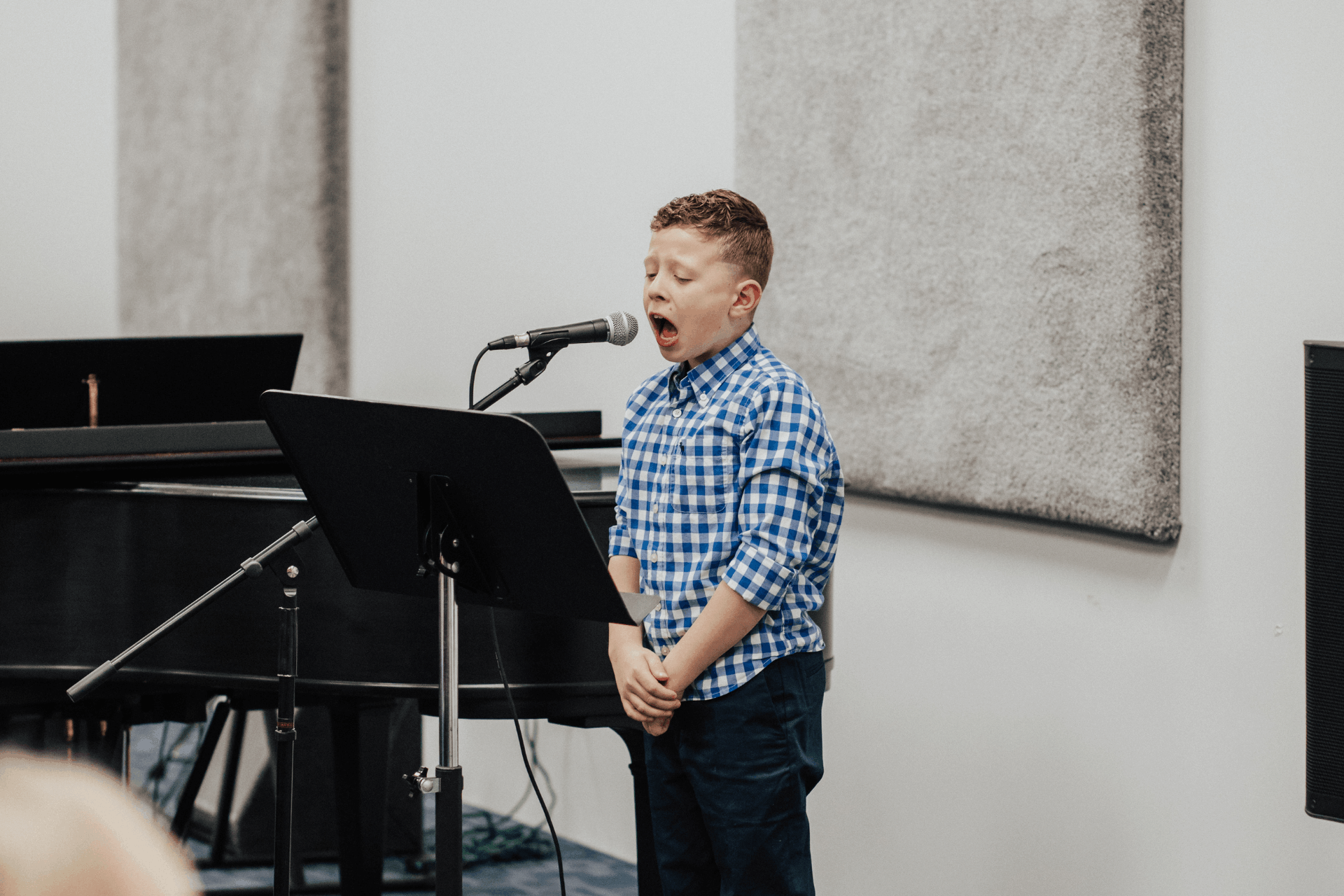
Singing is a combo of small learned technical habits that become consistent in a good singer.
At Chambers Music Studio, we guide students through these techniques in a collaborative, encouraging environment. As they work through each step, they’re not just learning exercises—they’re experiencing their voice grow stronger, more controlled, and more confident week by week.
#1: Set a Goal
I like to know what we’re working towards, and so do my students. When we know the goal, progress is trackable and fulfilling.
#2: Practice Good Vocal Health
Healthy voices last longer and sound stronger. Drinking water, resting your voice when needed, and avoiding strain are important to the health of your vocal folds. Putting this into practice allows you to build technique safely while continuing to improve.
#3: Learn To Match Pitch
No, you’re not tone deaf. You just need to practice. Pitch matching is the foundation of singing in tune, and it’s a skill that improves with listening and repetition. With practice, you’ll learn to recognize when your voice aligns with a note.
#4: Find Your Comfortable, Usable Vocal Range
Every singer has a range where the voice sounds strongest and most comfortable. This is your natural range. I help my students discover their natural range so the voice isn’t strained.
#5: Establish Great Singing Posture
Good posture includes standing tall with your shoulders relaxed. This helps your breath and tone, and keeps unnecessary tension out of the neck and jaw. Learn good posture and stick to it.
#6: Learn the “Singer’s Breath”
Singing is not just about taking a big breath or using more air. A healthy, steady voice comes from coordination between breath, the vocal folds, and the rest of the vocal system. When too much air escapes, the voice can feel less stable and tire more quickly. Strong technique helps singers use air efficiently, create a clear tone, and start and stop sound with control. Learning this coordination can help adult singers build confidence, consistency, and vocal freedom.
#7: Engage the Correct Muscles for Breath Support
Singing isn’t about pushing more air—it’s about coordination. In our lessons, we help singers balance airflow with vocal function so their tone stays steady, clear, and supported across every phrase—without tension or strain.
#8: Become Familiar With Common Vocal Warm-Up Patterns
Warm-ups prepare the voice for singing just like stretching prepares the body for exercise. I start singing lessons with warm-up exercises such as scales and arpeggios. These gently wake up the voice and build coordination between breath, pitch, and tone.
#9: Major Scale Exercise
Learning and practicing major scale patterns helps you develop pitch awareness and stability. As singers move up and down the scale, they strengthen control over their voice.
#10: 1-2-3-2-1 Exercise
The 1-2-3-2-1 pattern follows the first three notes of a scale. I have my students sing the first note, move up step by step to the third note, and return to the starting pitch.
Practicing this pattern helps singers develop pitch accuracy and become comfortable moving up and down in small intervals.
#11: 1-3-5-3-1 Exercise
The 1-3-5-3-1 pattern is done the same way as the 1-2-3-2-1 pattern, except it jumps through the scale using the first, third, and fifth notes before returning to the starting pitch.
#12: Learn the Lip Trill Exercise
A lip trill is when you gently blow air through relaxed lips so they vibrate together while you sing a pitch. It sounds like a soft motorboat or buzzing sound. I use this exercise to help my students relax tension in their voice and improve breath coordination.
#13: Learn the Dopey Mum Exercise
In the dopey mum exercise, you say or sing the word “mum” in a relaxed, slightly sleepy voice. The sound should feel low, round, and loose in the mouth and throat. I like this one because it helps singers release tension and create more space in the vocal tract.
#14: Practice the Correct Mouth Shape
When singing, you should have a relaxed and open mouth. This allows sound to resonate more freely. Practice adjusting your mouth shape to improve tone and create clearer vowels.
#15: Sing in Front of a Mirror
I love this one and always recommend it to those learning how to sing. Singing in front of a mirror allows you to monitor your posture, tension, and breathing. You can correct habits in real-time and not just hear, but also see the improvement.
#16: Use the HOO Head Voice Exercise
In this exercise, singers use the syllable “hoo” on a gentle scale pattern. The rounded “oo” vowel can help encourage an easier, lighter coordination often associated with head voice and thinner vocal fold contact. This can help singers reduce excess tension, use air more efficiently, and create a freer, more resonant sound.
#17: Do the YAH Soft Palate Exercise
The YAH soft palate exercise is where you vocalize the syllable “yah”. This opens and lifts the back of the mouth, or the soft palate, creating more space in the vocal tract. Sometimes, beginners have a tight or nasal sound, and this exercise helps correct that.
#18: Practice Onset OO Sounds
The onset OO exercise is where a note gently uses the vowel sound “oo.” Singers start the pitch with smooth airflow rather than forcing the sound. I like this one because it teaches control over vocal onset and helps singers maintain a steady tone during longer singing sessions.
#19: Use the Vowels IEAOU Exercise
In this exercise, you sing a simple scale while repeating the vowels I, E, A, O, and U. Practice keeping each vowel clear and relaxed, as you do in language acquisition, and pay attention to how the mouth shape changes for each vowel. This exercise helps you develop better tone and clearer articulation.
#20: Extend Your Range With SOVTs and Narrow Vowels
SOVT stands for semi-occluded vocal tract exercises. Think of exercises like lip trills and humming that teach you to regulate airflow.
I use these SOVT exercises with narrow vowels like “oo” or “ee” to keep the voice supported while reaching higher notes. It’s a great way to learn new notes and extend your range without pushing or straining the voice.
#21: Increase Vocal Agility With Fast-Moving Exercises
A common agility exercise includes quick five-note scales like 1-2-3-4-5-4-3-2-1 and repeating patterns such as 1-3-1-3 or 1-2-3-1 on a simple vowel. I use these exercises to train the voice to shift between notes smoothly and handle faster melodies.
#22: Add Some Style
This stage is a favorite. As practice starts paying off and technique develops, I watch singers add personal expression through their music. I always encourage my students to play around with their style and see what works best for them.
#23: Learn From Different Genres
Explore different genres and see what you love. This will help you develop different vocal skills and become more flexible in your practice.
#24: Begin To Harmonize

Listen closely to the voices around you. Play around with a note above or below it. Do they sound good together? If so, this is harmonizing. This not only makes beautiful music, but also strengthens your pitch accuracy and musical awareness.
In lessons, these exercises aren’t done in isolation. They’re part of a guided, encouraging process where students begin to feel their voice working more naturally. That moment when something “clicks” is one of our favorite parts of teaching.
Learn How To Sing: Frequently Asked Questions
Can I teach myself to sing?
Some people make progress on their own, but professional instruction that provides feedback, prevents vocal strain, and strengthens vocal control helps singers develop a healthy technique faster.
Can I sing if my voice is bad?
Many beginners believe their voice is not suited for singing. In reality, most people improve significantly once they learn how to sing with proper technique and breath support.
Can you learn to sing, or does it come naturally?
Natural talent can help, but singing is primarily a learned skill. I’ve found that when you learn how to sing, consistent practice and guidance develop a strong pitch, tone, and confidence over time.
Learn How To Sing With Chambers Music Studio
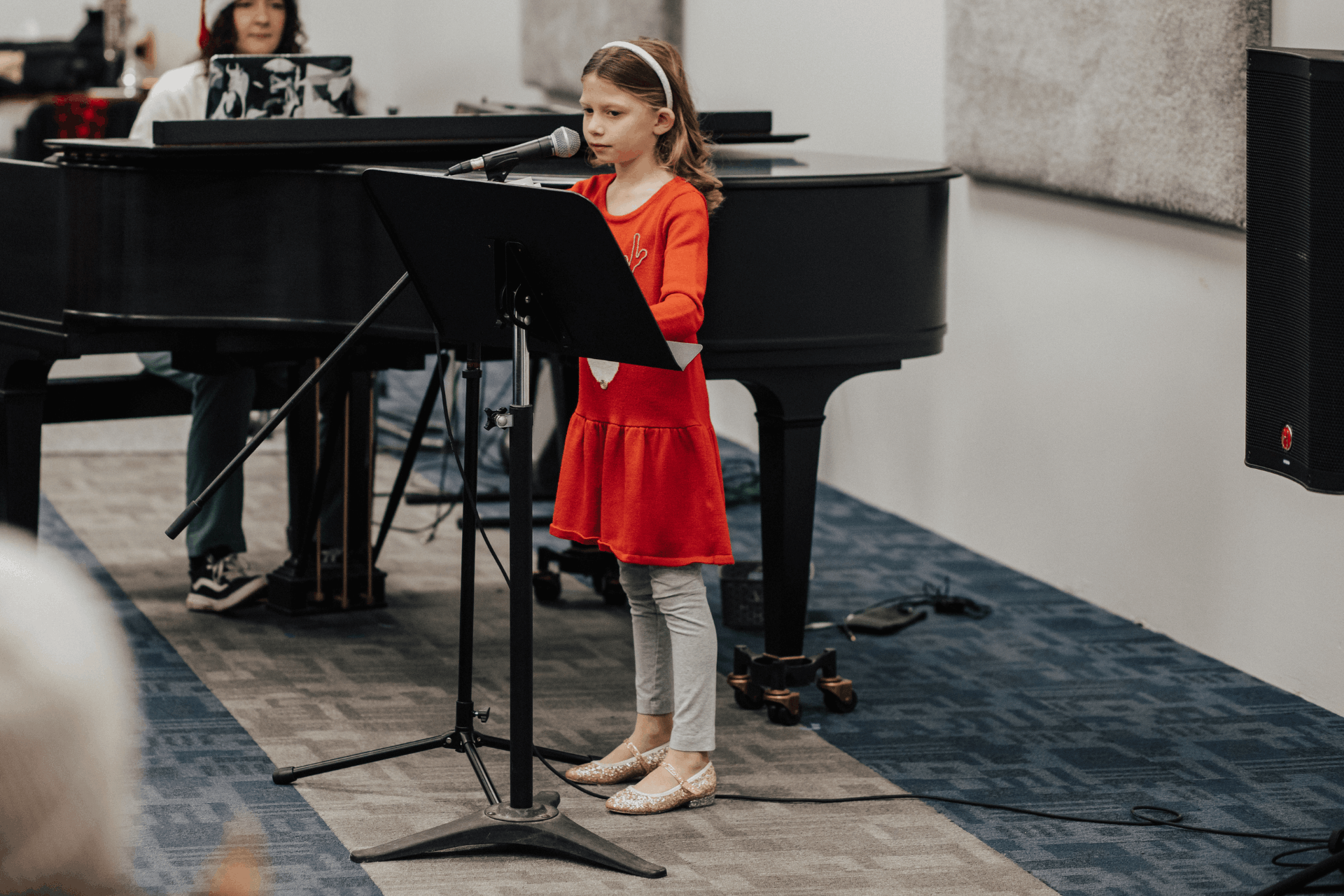
Many students come in unsure of their voice or hesitant to sing in front of others. Over time, that shifts. With consistent support and clear structure, they begin to trust their voice, take more risks, and express themselves more freely.
If you’re ready to learn how to sing with confidence and clear technique, I would love to help guide your voice lessons at Chambers Music Studio. Let’s connect!