

You bought the guitar. You tuned it. Then you searched for acoustic guitar chords and suddenly felt overwhelmed.
Don’t let that deter you!
The truth is, you don’t need dozens of chords to begin playing music. You need the right ones. When you focus on a small group of acoustic guitar chords, songs come faster, and confidence grows. We just have to get the momentum started. At Chambers Music Studio, that’s exactly what we focus on—helping students experience success early so they stay excited and keep growing.
Let me show you the four chords I teach first, and then watch them open the door to more music than you ever expected.
Importance of Learning Basic Chords
Students always want to pick up a guitar and automatically be able to play a real song right away. I get it! And I love that excitement. So I try to make it happen fast. And the fastest way is by learning a small set of acoustic guitar chords.
These chords are popular chords that appear across countless songs. Learning them makes learning many songs easier.
Chords are important because they give a song structure. Once your hands understand the few shapes of basic chords on the fretboard, your fingers begin recognizing patterns.
But learning acoustic guitar chords does more than just train the fingers. I like teaching them because learning them also trains rhythm and listening skills. Instead of focusing on isolated notes, students begin to hear how harmony works inside the music. Let’s explore these four basic acoustic guitar chords together.
4 Beginner Acoustic Guitar Chords
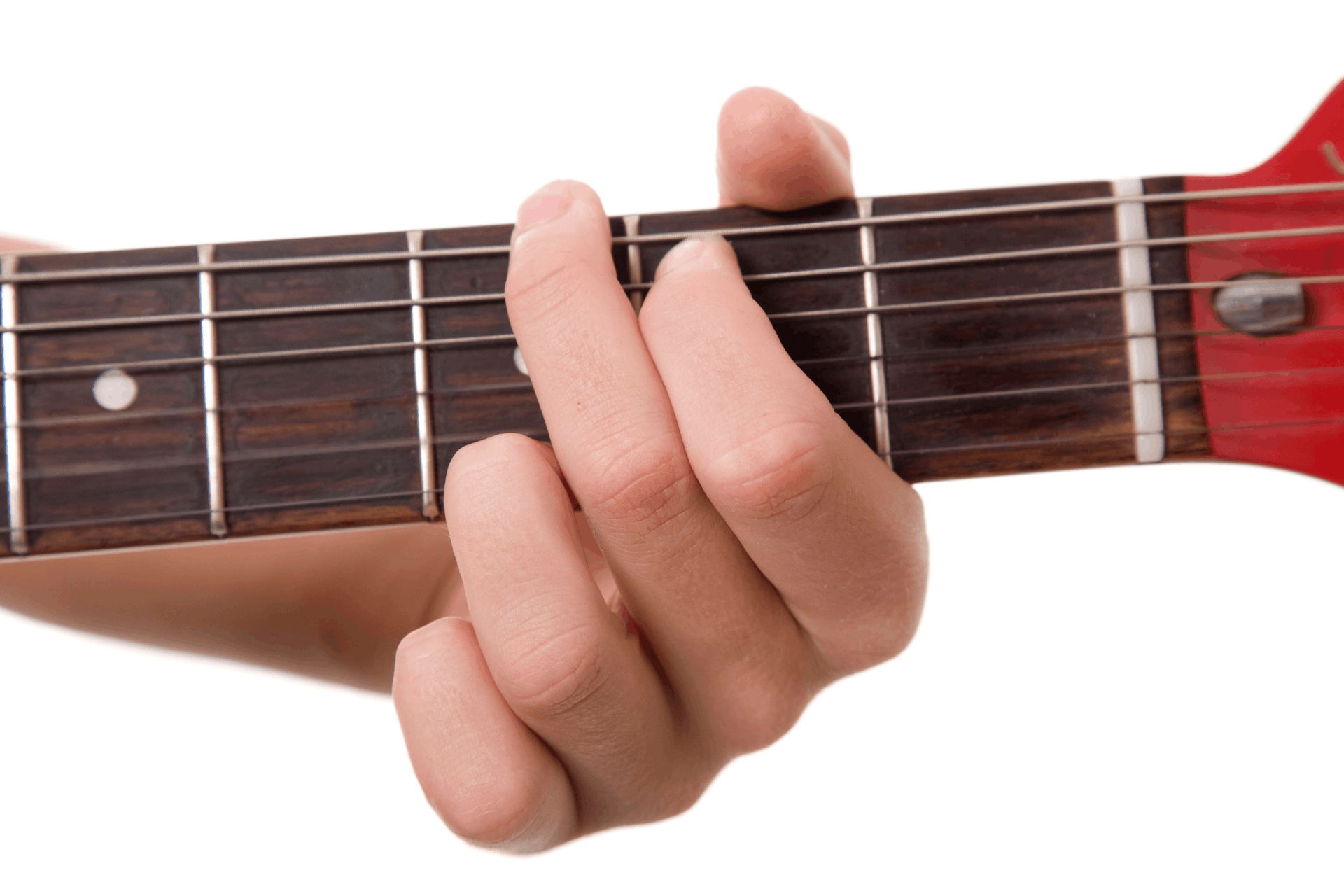
I teach many chords over time, but as a beginner, you don’t need to know that many to start making music. A small set of acoustic guitar chords unlocks many songs.
The four chords I introduce first are G, C, D, and Em. These are easy and comfortable for beginners to learn on the guitar, and they appear constantly.
Once you become comfortable moving between these acoustic guitar chords, you suddenly realize you already know the building blocks of a lot of songs and can start playing songs that you love.
The G Chord
I like to start with the G chord. It’s easily one of the most recognizable acoustic guitar chords in popular music. It produces a full sound that anchors many chord progressions.
The G chord teaches finger spacing across the fretboard. That stretch helps beginners develop control and awareness of where each finger belongs. Once you become comfortable with the G chord, many other acoustic guitar chords begin to feel easier.
The C Chord
The C chord introduces precision. Although it’s a harder chord to learn because the fingers have to land clearly across three strings while leaving others open, don’t get discouraged. There are many reasons I teach this chord early on.
C appears in a huge number of songs, which makes it one of the most useful acoustic guitar chords you can learn. While many beginners struggle with this one at first, that’s completely normal. I find learning it and practicing it early on strengthens the fingers. It makes all chords easier, and the wins come faster.
The D Chord
Now to learn accuracy. Because the D chord sits higher on the fretboard, students must learn to place their fingers carefully to keep every string clear. This produces a bright, focused sound.
Small but mighty, the D chord shape is smaller, but it plays a powerful role in many chord progressions. When you combine D with the other acoustic guitar chords on this list, you can start putting together entire song progressions.
The Em Chord
To get comfortable with playing chords, I like the Em chord. It uses only two fingers, which creates early success for beginners. When you hear music coming from your guitar quickly, you’re more motivated to practice and playing in general becomes more enjoyable.
Despite its simplicity, many beginners are surprised to hear how expressive this chord sounds and how often it shows up in popular songs.
How To Practice Acoustic Guitar Chords Without Getting Stuck
Knowing where the fingers go for each chord and actually moving between them is where progress stalls. Slow chord switching becomes frustrating for students who just want to feel like they’re playing something.
To combat this, I encourage students to slow everything down. I teach you to focus first on placing each finger carefully, then on making sure every string rings clearly before worrying about speed.
This is where practice is a must. Practicing transitions between two acoustic guitar chords at a time builds muscle memory. With repetition, those movements become automatic, and the music follows.
Benefits of Learning Acoustic Guitar for Beginners

I love teaching acoustic guitar. Not only does it build musical skills, but I watch students develop focus, patience, and confidence every week as they work through new music.
For younger students, guitar helps them continue to grow and strengthen coordination and pattern recognition. These skills support the classroom education and help children stay engaged with longer tasks.
Adults benefit too. Learning acoustic guitar chords provides a creative outlet while building concentration and problem-solving skills.
These small practice sessions add up. As a beginner, you’ll begin trusting your hands and recognizing real progress. It’s so fun to watch.
Why These Acoustic Guitar Chords Show Up in So Many Songs
I particularly like teaching acoustic guitar chords G, C, D, and Em because they show up in so many different genres and songs.
There’s a reason songwriters rely on these popular chords. These chords support strong melodies and harmonies, allowing musicians from all musical backgrounds to play together.
Learning these chords is more than just memorizing finger positions. It’s learning the foundation for a huge part of popular, recognizable music.
Songs You Can Play With These Acoustic Guitar Chords
So what acoustic guitar songs can you actually play with these chords? Great question!
Knowing these chords opens up a huge library of music. Some of the greatest acoustic guitar songs of all time use these chords. Classic songs like Knockin’ on Heaven’s Door, Wagon Wheel, and Free Fallin’ all rely on these chords.
More recent songs use these same acoustic guitar chords, too. Riptide by Vance Joy, Good Riddance (Time of Your Life) by Green Day, Let Her Go by Passenger, and Counting Stars by OneRepublic all use similar chord patterns.
Even Perfect by Ed Sheeran, Drivers License by Olivia Rodrigo, Stick Season by Noah Kahan, and Flowers by Miley Cyrus use these familiar chord progressions. Beginners have their pick of songs to learn once they know these four chords.
When students realize the possibilities, practice changes. Instead of drilling exercises, they begin playing songs they recognize, and that is where confidence and the love of guitar really grow.
Acoustic Guitar Chords: Frequently Asked Questions
What are the 4 basic acoustic guitar chords?
The four acoustic guitar chords I teach beginners first are G, C, D, and Em. These appear in many popular songs and build the foundation for success.
What is the 80 20 rule for guitar?
The 80/20 rule suggests that a small group of skills produces most of your progress. In guitar mastering, a few essential acoustic guitar chords unlock a large number of songs.
What is the forbidden chord in music?
The phrase “forbidden chord” comes from classical music theory and refers to certain dissonant sounds that were historically avoided. In modern guitar music, there is no forbidden chord, and creativity is always encouraged.
What is the 3-chord trick guitar?
The 3-chord trick refers to songs that rely on just 3 acoustic guitar chords. Often, combinations of G, C, and D. Many classic songs use this structure, making them especially useful for beginners to learn.
Learn Acoustic Guitar at Chambers Music Studio

At Chambers Music Studio, we don’t just teach chords—we help students experience what it feels like to play real music.
In lessons, you’ll hear songs come together sooner than you expect. You’ll feel the moment when your hands finally land where they’re supposed to. And you’ll start recognizing music in a completely new way.
That’s what we call Life at Chambers Music Studio—where small wins turn into real confidence. Whether you’re just getting started or supporting your child’s musical journey, we guide you step-by-step so that learning feels clear, encouraging, and actually fun.
Your first 30 days are designed as a Discovery Month, so you can experience lessons, meet your teacher, and build momentum—without pressure. Ready to start playing real songs? Let’s connect!