
If you’re trying to decide between a keyboard vs a piano vs digital piano, you’re actually asking a deeper question. Which instrument will actually support learning, progress, and long-term musical growth? This question has lasted for decades for a reason. Space, budget, volume control, and goals all matter.
I’ve helped many families work through this decision, and the answer almost always starts with understanding how each instrument shapes technique, sound, and development. To make this decision clearer, let’s look at all three options: acoustic piano, keyboard, and digital piano.
What Is an Acoustic Piano?
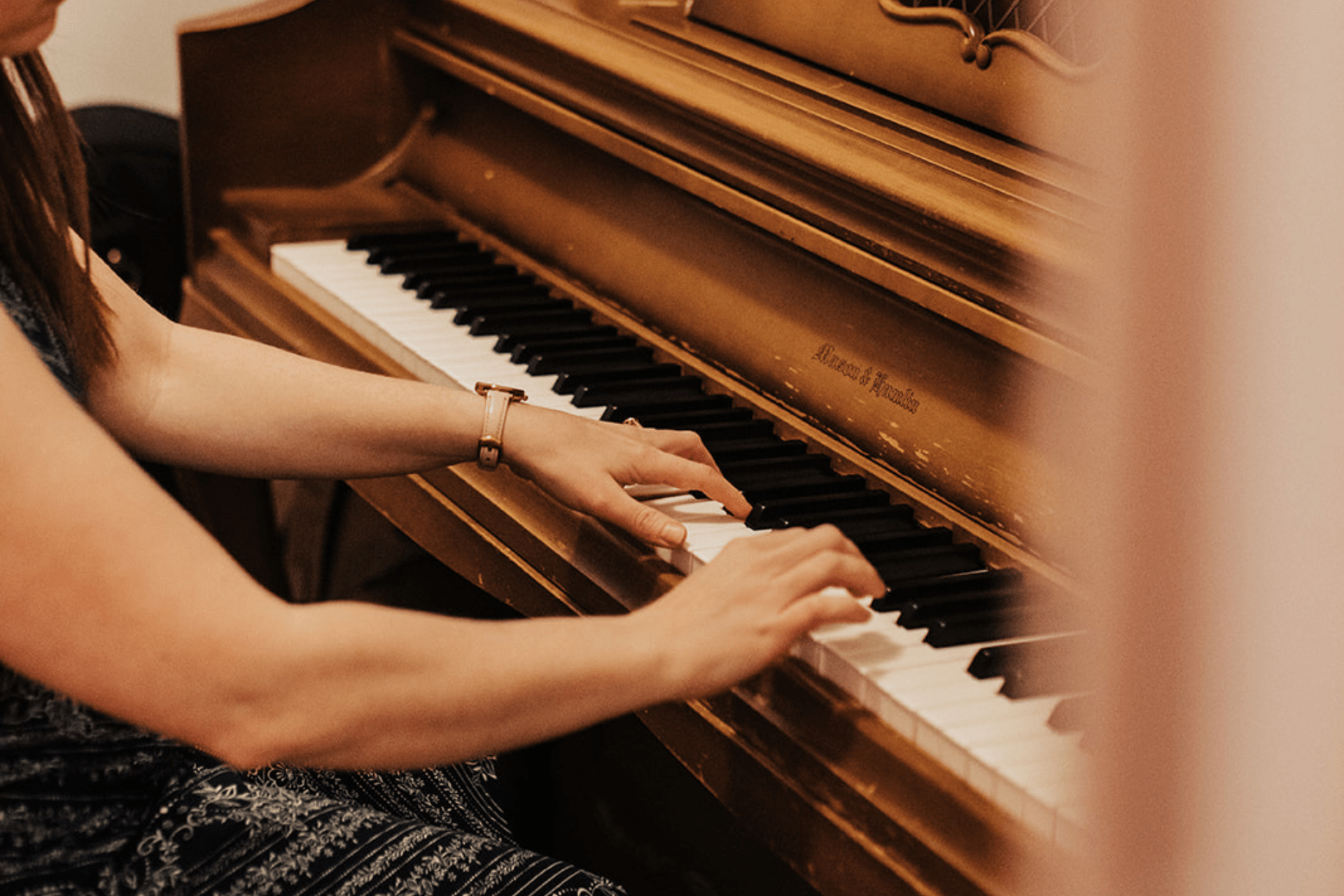
An acoustic piano is the traditional instrument most people picture. It uses strings, hammers, and a wooden body to produce sound. When a key is pressed, a hammer strikes a string, and the entire instrument vibrates.
That vibration travels directly into the fingertips. Over time, this physical feedback helps students develop finger strength, control, listening skills, and expressive tone. Families who choose an acoustic piano often value a strong technical foundation and the depth of natural sound it produces.
How Does an Acoustic Piano Work?
Inside an acoustic piano, strings are stretched across a solid frame. Each key acts as a lever that lifts a hammer, strikes a string, and releases a damper so the sound can ring freely.
Because of this mechanical system, the keys offer natural resistance. Students learn how much weight and control each note requires. When families compare keyboard vs piano, this tactile response is often the most noticeable difference and one of the most educationally valuable.
What Is a Keyboard?
A keyboard is an electronic instrument that produces sound using sensors and digital samples instead of strings. When a key is pressed, a recorded sound plays through speakers or headphones.
Keyboards are commonly chosen because they are lightweight, compact, and easy to store. They also allow for quiet practice with headphones, which can be helpful in shared living spaces. For families looking for a simple entry point into music, keyboards can make starting lessons more accessible.
How Do Keyboards Work?
Keyboards use sensors under each key to trigger sound instantly. Because there is no mechanical system or vibration:
- Volume stays consistent regardless of touch
- Keys often feel lighter
- No tuning or regular maintenance is required
This setup can feel comfortable at first, especially for young beginners. However, because the keys lack depth and resistance, keyboards do not always support the development of proper technique over time.
The Third Option Many Families Overlook: The Digital Piano
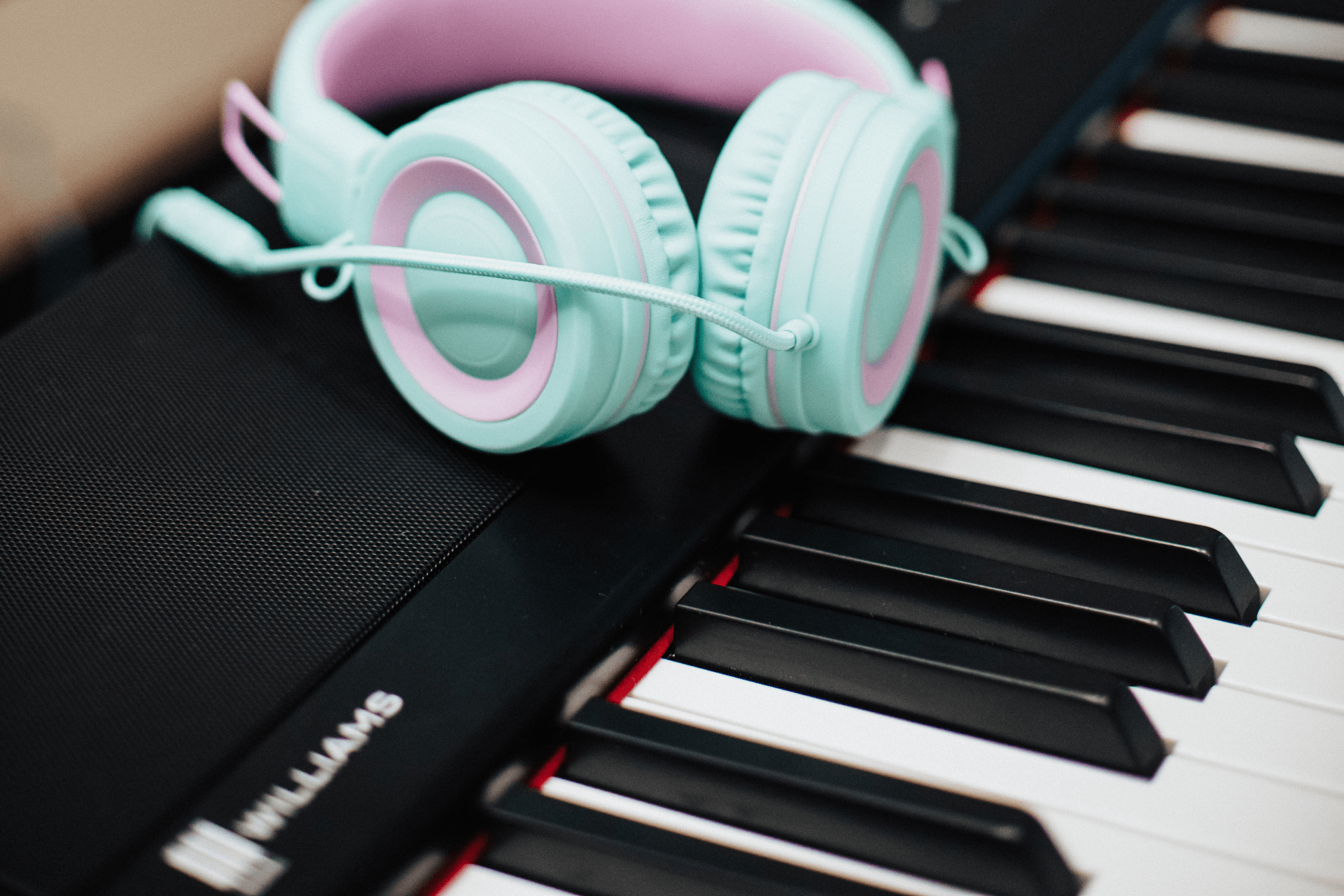
Most comparisons stop at keyboard vs piano, but there is a third option for you to consider: the digital piano. A digital piano may look similar to a keyboard at first glance, but it is built for music education rather than casual play. If you have ever seen a full-sized “keyboard” with heavier keys, you were likely looking at a digital piano.
How a Digital Piano Works
Digital pianos are designed to support proper technique and long-term development. Most include:
- Fully weighted or graded hammer-action keys
- Touch sensitivity that responds to how softly or firmly a key is played
- A full 88-key range
Because sound changes with touch, students learn control, strength, and expressive playing. These are skills that lightweight keyboards struggle to teach.
It’s also worth noting that while keyboard keys may look similar from above, they are shallow from the side. Digital piano keys have depth and resistance, which supports healthier hand development.
Digital Pianos Function Like a Keyboard
At the same time, digital pianos offer modern convenience, like volume control and headphone jacks. They don’t require tuning or major maintenance and have a compact design that better suits learning piano at home or in apartments.
Some digital keyboards even have the option to record or add other sound features. Digital pianos are one of the most recommended options for families who want serious musical growth without the space or cost of an acoustic piano.
Keyboard vs Piano vs Digital Piano
Let’s take a look at the similarities and differences between these three styles of piano.
Key Arrangement
All three instruments share the same note layout. Students learn identical hand positions and musical patterns, so early learning is consistent.
Action (How the Keys Feel)
Did you know that weighted keys better support long-term technique and hand development?
- Acoustic piano: Firm resistance from real hammers and strings
- Digital piano: Weighted keys designed to mimic acoustic resistance
- Keyboard: Often lighter, varies by model
Range
- Acoustic piano: Always 88 keys
- Digital piano: Typically 61-88 keys
- Keyboard: May have fewer keys
Sound Quality
- Acoustic piano: Natural vibration and expressive nuance
- Digital piano: High-quality samples that respond to touch
- Keyboard: Consistent digital sound with limited dynamics
Price
- Keyboard: Most affordable entry point
- Digital piano: Mid-range investment with strong educational value
- Acoustic piano: Highest cost and long-term investment
Portability and Maintenance
- Acoustic piano: Stationary, requires tuning and upkeep
- Digital piano: Moderately portable, minimal maintenance
- Keyboard: Highly portable, minimal maintenance
Can You Learn Piano on a Keyboard or Digital Piano?
Yes. Students can learn piano on both keyboards and digital pianos, especially when the instrument has weighted keys and a full range.
That said, digital pianos offer a significant advantage. They allow students to build technique in the same direction as an acoustic piano, making future transitions smoother. While keyboards can be a starting point, digital pianos are often a better educational choice for families thinking long-term.
Keyboard vs Piano vs Digital Piano: Frequently Asked Questions
Is it better to learn on a keyboard, digital piano, or acoustic piano?
There is no single best option. The right choice depends on space, budget, and learning goals. All three instruments can support progress when paired with quality instruction.
Are piano and keyboard the same thing?
They share the same note layout, but sound production differs:
- Piano: Strings and hammers
- Keyboard: Sensors and digital samples
- Digital piano: Digital sound with piano-like touch
Are keyboards easier to play than pianos?
Keyboards often feel easier at first because the keys are lighter. Acoustic and digital pianos require more control, which helps develop strength and technique over time.
Can I switch to an acoustic piano later?
Yes. Skills transfer well when students learn on instruments with weighted keys and full range. Digital pianos are especially effective for this transition.
Do beginners need an acoustic piano right away?
No. Many beginners start successfully on digital pianos or keyboards. Digital pianos often provide the best balance of feel, flexibility, and accessibility.
Enroll in Piano Classes With Chambers Music Studio

Chambers Music Studio provides personalized piano instruction for students of all ages. Our teachers help families choose the right instrument, build confidence step by step, and develop skills that last. Whether your student practices on a keyboard, digital piano, or acoustic piano, we meet them where they are and guide them forward with purpose. Enroll in piano classes with Chambers Music Studio and give your student the support they need to grow with confidence.