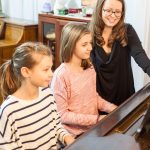
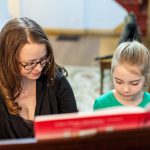
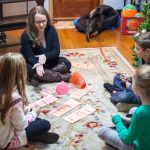
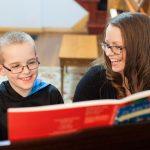
Music lessons are one of the best ways for students to build strong musical skills. A weekly lesson gives students individual attention, personal feedback, technique support, structure, and a trusted teacher who can guide their growth over time.
At Chambers Music Studio, we love lessons. Many of our teachers grew up taking private music lessons themselves. Some took lessons as children, some studied privately through college, and many still seek out mentorship and professional development as adult musicians.
But if you ask most music teachers what helped them become well-rounded musicians, very few will say “lessons alone.”
Most musicians grow through a combination of experiences: private lessons, school music programs, jazz band, marching band, choir, orchestra, chamber groups, community performances, recitals, jam sessions, and local music opportunities.
That is because music is not only an individual skill. Music is also something we do with other people.
Private lessons are incredibly important. They help students build technique, learn repertoire, strengthen reading skills, work toward goals, and receive feedback that is specific to their instrument and their level.
For many students, lessons are where they first begin to understand how to practice, how to solve musical problems, and how to develop their own sound.
But lessons are only one part of a complete music education.
A student can learn notes, rhythms, technique, and songs in a lesson room. But when they begin playing with other musicians, they learn a different set of skills.
They learn how to listen across the room.
They learn how to stay steady when another part is different from theirs.
They learn how to recover when something does not go perfectly.
They learn how to lead, follow, blend, respond, and support the group.
Those are the skills that help students become real musicians.
Ensemble playing is one of the most powerful ways for students to grow because it asks them to use their skills in real time with other people.
In an ensemble, students cannot only think about their own part. They have to listen to the group. They have to understand timing, balance, dynamics, entrances, endings, and communication. They have to learn how their part fits into the bigger musical picture.
That kind of learning is hard to recreate in a private lesson alone.
Ensemble helps students build:
- Stronger listening skills
- Better rhythm and timing
- Confidence playing with others
- Musical independence
- Teamwork and collaboration
- Performance readiness
- Responsibility to a group
- Flexibility when mistakes happen
- A deeper understanding of how music works
Learn more here: https://chambersmusicstudio.com/lessons/group-classes/ensemble-classes/
For younger students especially, ensemble experiences can also help music feel more social and motivating. Instead of practicing only for themselves or their teacher, students get to experience music as something shared.
That shared experience can be incredibly meaningful.
Music Is Also Human Development
- At Chambers, we believe music education is about more than learning songs.
Music helps students build confidence, focus, creativity, emotional expression, resilience, independence, and a sense of belonging. Ensemble playing supports many of those same skills because students are learning how to show up as part of a group.
They learn that their part matters.
They learn that other people are counting on them.
They learn how to listen, adjust, and keep going.
They learn that music is not about perfection — it is about connection, growth, and communication.
Research on music education continues to explore the ways music training can support cognitive and social development, including areas like executive function, self-regulation, social connection, and prosocial behavior.
This is one reason we see ensembles as such an important part of a student’s music journey. It gives students a place to practice not only musicianship, but also responsibility, cooperation, and confidence.
When our teachers look back on their own musical development, many remember the experiences outside of private lessons just as much as the lessons themselves.
They remember the school ensemble that taught them how to follow a conductor.
They remember the jazz band that taught them how to listen and improvise.
They remember the choir that taught them how to blend.
They remember the marching band that taught them discipline and teamwork.
They remember the first local performance where they had to keep going even when they felt nervous.
Those experiences matter.
They help students take what they are learning in lessons and apply it in a living, breathing musical environment.
That is why we encourage students to look for opportunities beyond the lesson room when they are ready.
At Chambers Music Studio, our Ensemble classes are designed to help students become stronger, more confident, and more connected musicians.
Students work together toward a shared musical goal and always finish the class cycle with a final performance for friends and family. That final performance gives students something to work toward and helps them experience the joy of making music with others.
Ensemble is open to students on any instrument, which makes it a flexible and exciting opportunity for growing musicians. Whether a student plays piano, guitar, voice, violin, drums, bass, ukulele, or another instrument, ensemble can help them learn how to contribute to a group sound.
Lessons Are the Start. Ensemble Helps Music Come Alive.
Private lessons help students build the foundation.
Ensemble helps students use that foundation with others.
Both are important.
A complete music education gives students individual support and shared musical experiences. It gives them time to grow alone and opportunities to grow in community.
That is why our advice from your teachers this month is simple:
Do more than lessons when you can.
Join an ensemble. Attend a performance. Play music with a friend. Try a group class. Say yes to the recital. Look for the experiences that help music become part of real life.
Because when students make music with others, they do not just become better players.
They become better listeners, better collaborators, and more confident musicians.