Can music help prevent dementia? Emerging research suggests that regularly listening to music and playing a musical instrument may be associated with a lower risk of dementia and better cognitive health as we age.
For those of us who have spent our lives making and teaching music, that may not feel entirely surprising.
Music has a powerful way of staying with us.
A song comes on the radio and suddenly you’re somewhere else. Maybe you’re back in high school. Maybe you’re remembering your wedding. Maybe you’re thinking about someone you haven’t thought about in years.
Music connects memory, emotion, movement, attention, and identity in an extraordinary way.
But researchers are now asking an even bigger question: Could making music throughout our lives actually help support brain health and reduce our risk of dementia?
The research is fascinating—and it gives us another reason to think about music education not simply as something we do as children, but as part of a healthy, lifelong musical life.
What Does the Research Say About Music and Dementia?
One of the most compelling recent studies followed more than 10,800 adults age 70 and older.
Researchers found that people who reported always listening to music had a 39% lower incidence of dementia compared with people who never, rarely, or only sometimes listened to music.
Playing a musical instrument often or always was associated with a 35% lower dementia risk. People who both listened to and played music had a 33% lower risk of dementia and a 22% lower risk of cognitive impairment without dementia.
Importantly, this was an observational study. It shows an association, not proof that music itself prevents dementia. Researchers describe musical engagement as a promising and accessible strategy that may help support cognitive health and potentially delay cognitive impairment.
So, can we say that playing piano will prevent Alzheimer’s disease? No.
Can we say that there is increasingly interesting evidence connecting lifelong musical engagement with cognitive health? Absolutely.
Why Might Music Be Good for an Aging Brain?
Think about everything your brain has to do when you play even a relatively simple piece of music.
You’re reading or remembering notes. You’re listening to pitch and rhythm. You’re coordinating your hands—or perhaps your hands, feet, breathing, and voice. You’re recognizing patterns. You’re making tiny adjustments based on what you hear. You’re maintaining attention while simultaneously expressing emotion.
That’s a remarkable amount of brain activity for one experience.
Music engages skills connected to:
- Memory
- Attention and concentration
- Auditory processing
- Fine and gross motor coordination
- Pattern recognition
- Emotional processing
- Decision-making
- Creativity
- Social connection
This is one reason I like to describe music as a whole-brain activity rather than simply an artistic activity.
If you’d like to explore this connection further, read our Chambers Music Studio article: https://chambersmusicstudio.com/does-music-help-you-focus/
Music, Memory and Alzheimer's Disease
One of the most moving things about music is its ability to reach people even after other forms of communication become difficult.
The Alzheimer’s Association notes that music can provide enrichment and engagement for people living with Alzheimer’s disease. Even in later stages, a person may still be able to tap a beat or sing a familiar song from childhood.
Music can also be used to encourage movement, evoke meaningful memories, create connection, and support self-expression.
External research: https://www.alz.org/help-support/caregiving/daily-care/art-music
This doesn’t mean music cures Alzheimer’s or reverses dementia. It means that musical experiences can remain meaningful even as cognitive abilities change.
And that tells us something profound about how deeply music becomes woven into our memories and identities.
What Is Cognitive Reserve—and Where Might Music Fit?
You may hear researchers use the term cognitive reserve when discussing healthy aging.
In simple terms, cognitive reserve refers to the brain’s ability to cope with age-related changes or disease while continuing to function.
Activities that keep us mentally, physically, and socially engaged are often discussed as ways of supporting brain health throughout life.
Music is particularly interesting because it can combine all three.
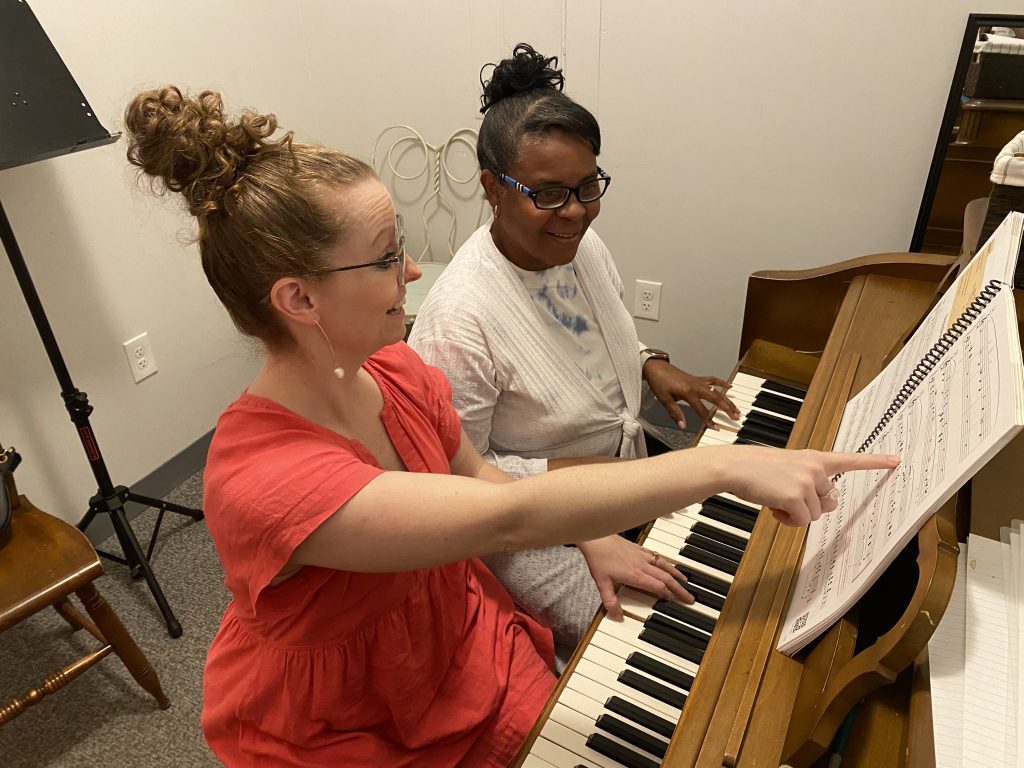
Learning an instrument challenges the mind. Playing requires physical coordination. Lessons, ensembles and performances create opportunities for social connection.
And unlike some “brain exercises,” music gives us something else that’s incredibly important:
We actually want to keep doing it.
You don’t have to spend your evening completing another cognitive exercise.
You can learn the song you’ve always wanted to play.
Is It Ever Too Late to Learn an Instrument?
No. Adults can begin learning music at any age.
That’s one of the things I wish more adults understood.
You don’t need to have taken piano lessons as a child. You don’t have to read music already. You don’t need “natural talent.” And you certainly don’t have to plan on performing at Carnegie Hall.
Adults come to music lessons for all kinds of reasons.
Some want a creative outlet after work. Others finally have time to learn the piano that’s been sitting in their house for 20 years. Some want to sing more confidently. Others are looking for a meaningful hobby that challenges their brain and gives them something to look forward to each week.
Learning itself is part of the value.
At Chambers Music Studio, our music lessons include opportunities for children, teens and adults to study piano, voice, guitar, strings, percussion, woodwinds, brass and more.
If piano has always been on your bucket list, explore our piano lessons in Bexley, Columbus and Worthington,
Why Lifelong Music Education Matters
As a music educator, I’ve always believed that the purpose of music education extends far beyond preparing for the next recital.
Music teaches us how to listen.
It teaches us how to concentrate.
It asks us to coordinate our bodies and minds.
It challenges us to solve problems.
It gives us a way to express emotions that can be difficult to put into words.
And perhaps most importantly, music can continue growing with us throughout our entire lives.
A five-year-old may experience music through movement and singing. A ten-year-old may discover piano. A teenager may find confidence through performing. An adult may return to an instrument after decades away.
The activity changes.
The musical life continues.
That’s the philosophy behind the learning pathway we’ve built at Chambers Music Studio.
A Music Educator's Perspective on Lifelong Learning
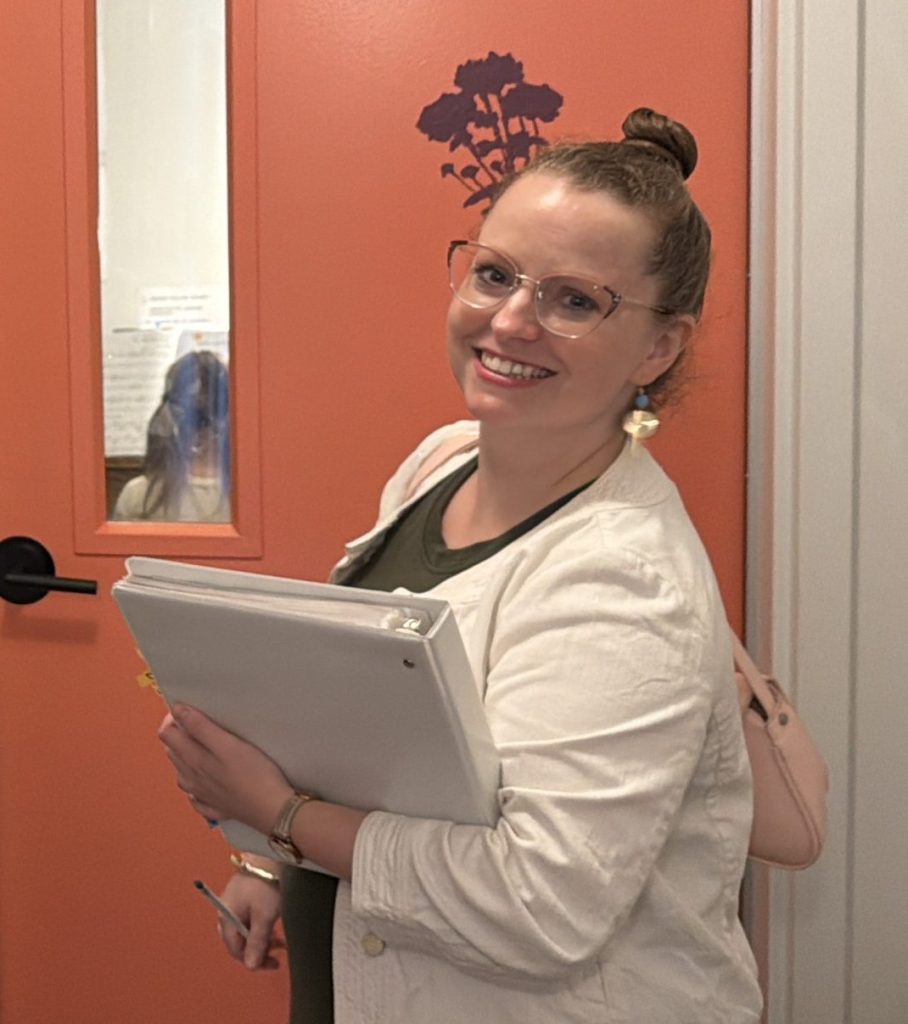
I’m Julie Chambers, founder and CEO of Chambers Music Studio and host of the Musical Life podcast.
My perspective on this topic comes from both the research and nearly two decades of experience in music education.
I hold both a Bachelor’s degree and Master’s degree in Music Education from Capital University, along with Kodály training and a Music Pedagogy diploma from the Kodály Institute in Kecskemét, Hungary.
The institute is located in the birthplace of Zoltán Kodály, the Hungarian composer, musician and influential music educator whose philosophy has had a profound influence on the way music is taught around the world.
One of the ideas associated with Kodály’s philosophy has remained central to my own approach to music education: music belongs to everyone.
Not only children.
Not only professional musicians.
Everyone.
That’s one reason the research surrounding music and healthy aging interests me so much. Music education shouldn’t be something we “graduate from.” It can be part of our lives from infancy through adulthood and into our senior years.
You can learn more about my background and the educational philosophy behind Chambers Music Studio on our About Chambers Music Studio page.
Music Lessons for Adults in Bexley and Columbus, Ohio
For adults in Central Ohio who have thought about returning to music—or beginning for the first time—there are opportunities close to home.
Chambers Music Studio serves students throughout Bexley, Columbus, Worthington and the greater Central Ohio area.
Our Bexley music studio at 2738 E. Main Street serves children and adults from Bexley and surrounding Columbus neighborhoods. It’s designed to be more than a place where you arrive for a weekly lesson and immediately leave. Our goal is to create a musical community where students and families can learn, connect and make music a lasting part of their lives.
Our programs also serve students throughout the Columbus area, with options for beginning through advanced musicians and students across the lifespan.
Explore our Bexley music lessons or visit our music lessons page to see the instruments and programs available.
So, Can Music Help Prevent Dementia?
Here’s the short answer:
Research suggests that regular musical engagement is associated with a lower risk of dementia, but scientists have not established that music itself prevents dementia.
A large study of adults over 70 found that frequent music listening was associated with a 39% lower dementia risk, while frequently playing an instrument was associated with a 35% lower risk.
Music also provides a combination of cognitive stimulation, physical coordination, emotional engagement and social connection—all valuable components of a healthy, active life.
And for people already living with Alzheimer’s disease or another dementia, familiar music can continue to provide opportunities for memory, expression and connection.
That makes music worth considering not as a cure, but as one meaningful piece of a lifelong approach to learning, connection and brain health.
Frequently Asked Questions About Music and Dementia
Research has found an association between frequent music listening and lower dementia risk, but it has not proven that listening to music directly prevents dementia. In one study of more than 10,800 adults age 70 and older, always listening to music was associated with a 39% lower incidence of dementia.
A 2025 study found that older adults who often or always played a musical instrument had a 35% lower incidence of dementia compared with the reference group. Because this was observational research, it demonstrates an association rather than proving that playing an instrument causes the reduction.
Learning piano combines memory, auditory processing, visual processing, fine-motor coordination, pattern recognition, attention and emotional expression. It is therefore a cognitively complex activity that can provide ongoing mental stimulation.
Yes. There is no age at which someone becomes “too old” to begin learning music. Lessons can be adapted to a student’s goals, experience, mobility, learning style and interests.
Music does not cure Alzheimer’s disease, but the Alzheimer’s Association reports that music can provide opportunities for engagement and self-expression. Familiar songs may remain recognizable even in later stages and can sometimes encourage singing, movement and emotional connection.
Chambers Music Studio provides music education for children and adults throughout Bexley, Columbus, Worthington and Central Ohio, including piano, voice, guitar, strings, percussion, woodwind and brass instruction.
Build a Musical Life That Lasts
You don’t have to become a concert pianist to benefit from making music.
You just have to begin.
Whether you’re 7, 47 or 77, learning music gives you an opportunity to challenge your brain, develop a new skill, express yourself and become part of a musical community.
At Chambers Music Studio, we don’t believe music lessons are simply about learning an instrument.
They’re about building a musical life.
If you’ve always wanted to play piano, sing, pick up the guitar or return to an instrument you haven’t touched in years, we’d love to help you find the right place to start.
Serving students throughout Bexley, Columbus, Worthington and Central Ohio.
And don’t forget to listen to the accompanying episode of the Musical Life podcast: “Can Music Help Prevent Dementia? What the Research Says.”