Composer of the Month:
Johann Sebastian Bach
Johann Sebastian Bach
Each month, students have the chance to search for a hidden photo of our Composer of the Month somewhere around Chambers Music Studio. If a student finds the hidden composer photo, they can tell the front desk and receive a special surprise.
For October, we are traveling back to the Baroque period to meet one of the most influential composers in the history of Western music: Johann Sebastian Bach.
Bach is remembered for many things, but one of the most remarkable features of his music is the way he organized musical ideas. Melodies, rhythms, harmonies, and independent musical lines fit together with incredible precision, even in pieces that sound highly complex. For that reason, our focus this month is counterpoint and musical architecture.
For students taking music lessons at Chambers Music Studio, Bach offers a chance to think about music as more than a series of individual notes. His compositions show us how small musical ideas can connect, develop, repeat, change, and eventually become part of a much larger structure.
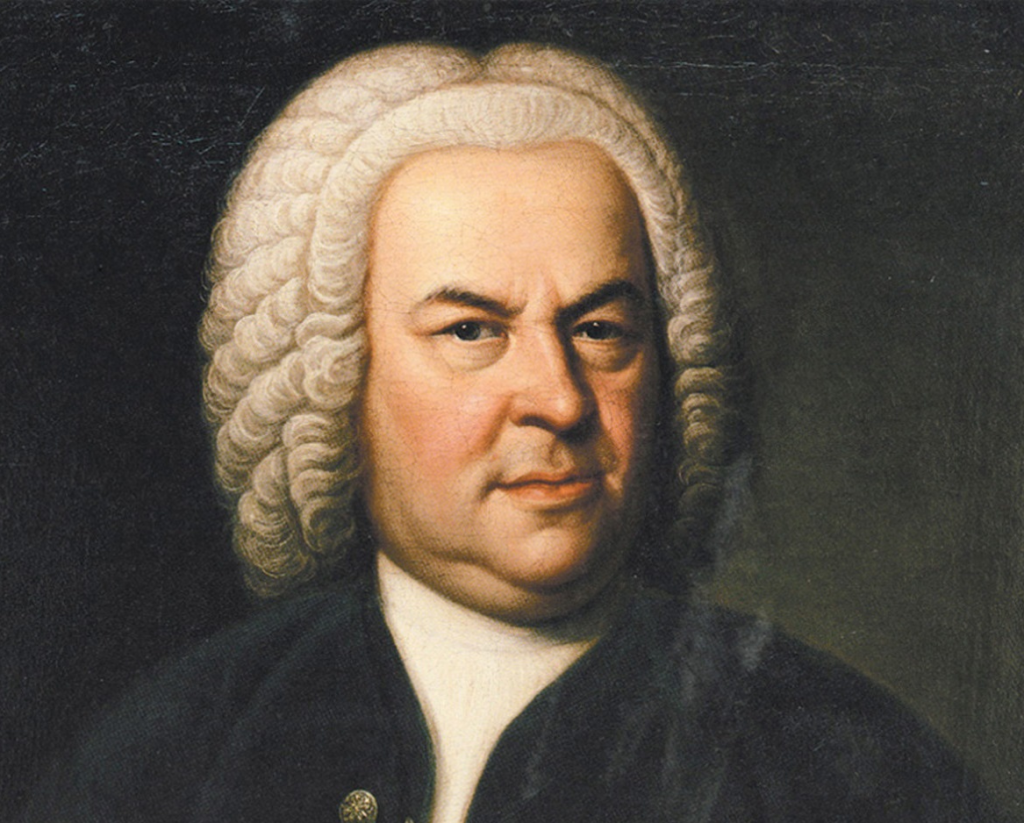
Who Was Johann Sebastian Bach?
Johann Sebastian Bach was born in 1685 in Eisenach, Germany, into a family with a long history of professional musicians. Music surrounded him from an early age, and he eventually became an accomplished organist, keyboard player, composer, teacher, and musical director.
Throughout his career, Bach held musical positions in several German cities, including Arnstadt, Weimar, Köthen, and Leipzig. The responsibilities of those jobs varied considerably, which meant Bach composed many different kinds of music. He wrote for organ and keyboard, solo instruments, chamber ensembles, orchestras, choirs, and singers. He also created music for churches, courts, students, and professional musicians.
Bach died in 1750, but his music continued to influence generations of composers and performers. Today, his works remain an important part of classical music education, and musicians around the world continue to perform and study his compositions.
One reason Bach remains so important is that his music allows students to explore several musical skills at once. Rhythm, harmony, melody, listening, technique, musical form, and independence all come together in his compositions. Studying Bach is not simply about studying an important composer from hundreds of years ago. It is also a way to understand how music itself can be organized.
What Was the Baroque Period?
The Baroque period was an era of European music that lasted approximately from 1600 to 1750. During this time, composers explored increasingly elaborate approaches to harmony, rhythm, instrumentation, ornamentation, and musical form.
Baroque music often contains a strong sense of movement. Rhythmic patterns may continue throughout long sections of a composition, while melodies and harmonies change around them. Composers also frequently used contrast, allowing a solo instrument to interact with a larger ensemble or creating dramatic differences between sections of a piece.
Another important feature of Baroque music was the development of increasingly sophisticated harmony. The system of major and minor keys that students encounter in music lessons today became especially important during this period. Musical forms such as the concerto, suite, sonata, fugue, cantata, and oratorio also became significant parts of the Baroque musical world.
Bach did not invent all of these ideas, but he became one of the composers most closely associated with bringing them together. His music demonstrates just how complex a composition can become while still remaining organized and understandable.
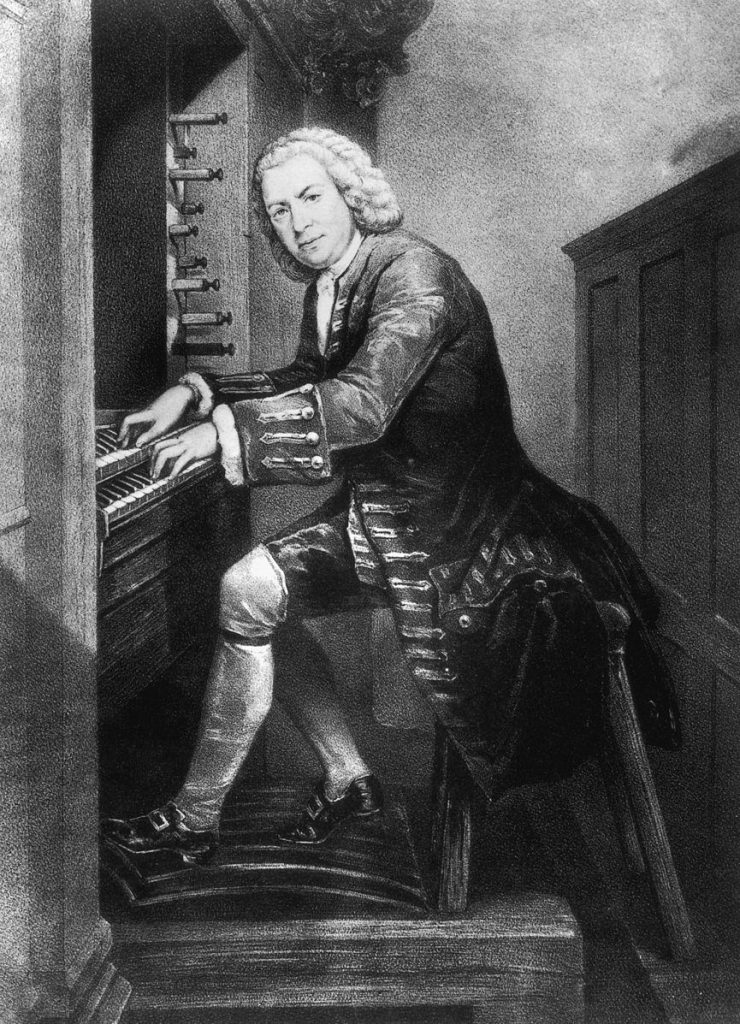
What Is Counterpoint?
One of the most important concepts students can explore through Bach’s music is counterpoint. Counterpoint is the art of combining two or more independent musical lines so that each has its own shape and direction while still working with the others.
Imagine several people participating in a conversation. One person introduces an idea, another responds, and someone else adds something new. Each person has an individual voice, but together they are participating in the same conversation. Counterpoint works in a similar way.
In a contrapuntal piece, one musical voice may introduce a melody while another enters with a different line. A third part might join later. Sometimes the musical lines imitate each other, and sometimes they move in completely different directions. The challenge for the composer is making sure those independent parts still sound like they belong together.
Bach became particularly famous for his ability to create complicated counterpoint that remained remarkably organized. Musical ideas can enter in different voices, appear in new keys, return later in the piece, or be transformed in unexpected ways. Even when several musical lines are happening at once, each one has a purpose within the larger composition.
Students experience a practical version of this whenever they play music with other people. A musician needs to know their own part, but they also have to listen to what everyone around them is doing. Students in Jam Band and Ensemble Classes develop this skill as they learn to maintain their own rhythm or musical line while listening and responding to the rest of the group.
What Is Musical Architecture?
Another way to understand Bach’s music is through the idea of musical architecture. Architecture involves taking many smaller pieces and arranging them so that they form one complete structure. Music can work in much the same way.
A composer has many musical materials available: melodies, rhythms, harmonies, phrases, patterns, dynamics, and different sections of a piece. The composer decides how those elements will connect and how the listener will move from one musical idea to another.
Bach was exceptionally skilled at creating large structures from relatively small musical ideas. A melody introduced near the beginning of a piece might return later in another voice. A rhythmic pattern might repeat while the harmony underneath it changes. A musical idea may appear in a different key or be slightly altered each time it returns.
The listener may not consciously recognize every connection, but those relationships help create a sense that the music belongs together.
This is an important concept for developing musicians because beginning students often experience music one note at a time. As they become stronger readers and performers, they begin recognizing larger patterns. Instead of seeing ten unrelated notes, they might recognize a scale. Instead of memorizing every chord individually, they might recognize a repeating chord progression. Instead of thinking only about the next measure, they begin understanding an entire phrase or section.
Learning to recognize musical architecture helps students move from simply playing notes to understanding how music is constructed.
The Brandenburg Concertos
One of the best places to hear Bach’s approach to musical structure is in the Brandenburg Concertos. This collection consists of six instrumental concertos that Bach presented to Christian Ludwig, Margrave of Brandenburg, in 1721.
One of the most interesting things about the Brandenburg Concertos is the variety of instruments Bach uses. The six works do not all feature exactly the same orchestral combination. Instead, Bach explores different groups of instruments and allows them to interact in different ways.
At some moments, one instrument becomes especially noticeable. At others, a small group interacts with the larger ensemble. Musical ideas may be passed between instruments, repeated, answered, or transformed. This creates a sense of musical conversation and gives students an excellent opportunity to practice active listening.
When listening to the Brandenburg Concertos, students do not need to understand every detail of Baroque musical form. Instead, they can begin with something much simpler: listen for who is playing.
Which instrument catches your attention first? Does another instrument answer it? When does the entire ensemble play together? Can you hear a melody move from one section of the group to another?
These questions help students begin hearing music as a collection of interacting parts rather than one large block of sound.

Why Ensemble Listening Matters
The Brandenburg Concertos also illustrate an important lesson for any student who performs with other musicians: every musical part has a role.
Not everyone can play the melody at the same time. Sometimes one musician leads while another provides harmony or rhythmic support. Later, those roles may change. An instrument that seemed unimportant a moment earlier may suddenly become the center of attention.
Students experience the same thing when they perform in an ensemble. Playing your own notes correctly is important, but ensemble musicians also have to listen to balance, rhythm, entrances, dynamics, and the other performers around them.
A strong musician learns when to stand out and when to blend. Bach’s music provides countless examples of individual musicians contributing to a much larger musical structure.
Bach’s Prelude in C Major
Another important piece for our October listening is Bach’s Prelude in C Major, BWV 846, which opens Book I of The Well-Tempered Clavier.
The Prelude in C Major sounds very different from the busy instrumental conversations students may notice in the Brandenburg Concertos. Instead, the piece is built largely from a flowing pattern of broken chords. The rhythmic shape remains relatively consistent while the harmony gradually changes underneath it.
This makes the Prelude a wonderful example of musical architecture because students can easily hear both repetition and change.
The repeated pattern creates stability. The listener becomes familiar with the movement of the notes, but the chords continue changing and moving the music forward. Eventually, the harmony creates moments of tension before leading the listener toward the conclusion.
This is something students encounter in many different styles of music. A pattern does not have to disappear in order for the music to change. A pop song may repeat the same rhythm while changing chords. A pianist may maintain the same accompaniment pattern while a melody develops above it. A drummer may continue a groove while the rest of the band moves into a new section.
Bach’s Prelude gives students a clear example of how repetition can create structure without making a composition feel completely static.
The Well-Tempered Clavier
The Prelude in C Major is part of a much larger collection called The Well-Tempered Clavier. The collection contains preludes and fugues in every major and minor key, giving Bach an opportunity to explore a wide range of musical possibilities.
For students, this collection demonstrates the importance of becoming comfortable with different keys. A musician who only knows how to play comfortably in one key has fewer options available. Learning scales, chords, key signatures, and patterns in multiple keys gradually gives musicians greater freedom.
This is one reason concepts that can sometimes feel repetitive during music lessons are so important. Scales, chord patterns, rhythmic exercises, reading practice, ear training, and technique are not isolated assignments. They give students musical tools.
The more tools a musician develops, the more music they are capable of understanding, performing, and eventually creating.
What Is a Fugue?
When you listen to Palestrina, do not worry about understanding everything immediately.
Instead, try listening for one thing at a time.
Ask your student:
- How many different voices can you hear?
- Do all the singers begin at the same time?
- Can you hear one voice enter after another?
- Does the music sound busy or peaceful?
- Can you follow one particular voice?
- When do the singers sound like one group?
- When do you hear separate musical lines?
- Does the music feel different from the music you normally hear?
You can even try following one voice until you lose it.
Then choose another.
That simple listening game helps students begin hearing how polyphonic music is constructed.
Because Bach is so closely associated with counterpoint, students may also hear the word fugue when learning about his music.
A fugue is a type of contrapuntal composition built around a main musical idea called a subject. One musical voice introduces the subject, and then another enters with the same or a closely related idea. Additional voices may join as the piece continues.
The composer then develops that material. The subject may return in different keys, appear in different voices, or interact with other musical ideas.
Fugues are another excellent example of Bach’s musical architecture because they show how much music can grow from one relatively small idea. Instead of constantly introducing completely unrelated material, Bach could take a single musical idea and explore it in many different ways.
This is also a useful concept for young composers and students interested in songwriting. Creating music does not always require inventing a completely new idea every few seconds. Sometimes a strong musical idea becomes more interesting when it is repeated, changed, developed, or combined with something else.
Learning to Recognize Musical Patterns
One of the simplest ways for students to begin understanding Bach is by learning to recognize patterns.
Patterns are everywhere in music. Rhythms repeat, melodies return, chord progressions cycle, and musical phrases often follow recognizable shapes. Once students begin noticing those patterns, music frequently becomes easier to read and remember.
A page of music can initially look like dozens or even hundreds of unrelated notes. With experience, students begin noticing that many of those notes belong to something larger. They may recognize a scale, a chord, a repeated rhythmic figure, or a familiar accompaniment pattern.
This is an important part of developing musical fluency.
Students in Piano Keys develop skills in music reading, technique, ear training, theory, sight reading, and musicianship that gradually help them recognize these kinds of musical relationships. Instead of approaching every new piece as an entirely new puzzle, students begin using skills and patterns they have already learned.
Bach’s music is especially useful for practicing this because his compositions contain so many carefully connected ideas.
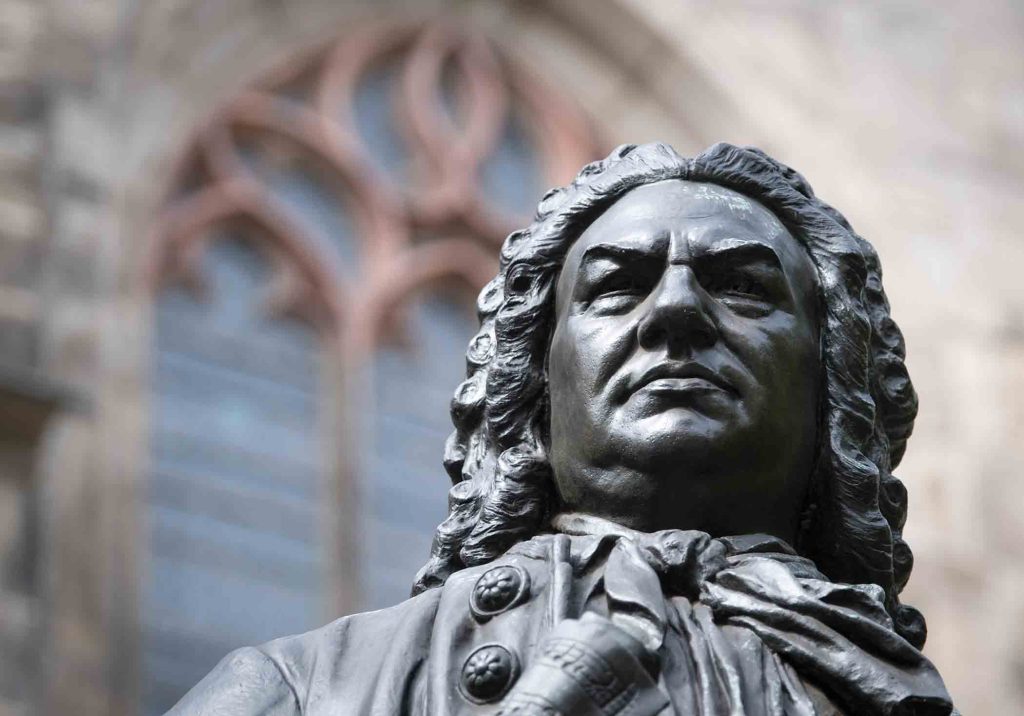
Bach Shows Us Why Listening Matters
Counterpoint also teaches students an important lesson about listening.
When several musical lines are happening simultaneously, a performer cannot focus exclusively on their own notes. Musicians must remain aware of what is happening around them. They need to know whether another instrument has the melody, whether their own part should be louder or softer, whether their rhythm matches the ensemble, and how their part contributes to the overall direction of the piece.
These are skills that develop gradually through musical education.
A young student may begin by learning how to maintain a steady beat while another person sings. Later, they might learn to perform one rhythm while someone else performs another. Eventually, they may be able to maintain an independent musical part while listening and responding to an entire ensemble.
Students participating in private lessons, Piano Keys, Jam Band, ensembles, performances, and other Chambers programs gradually learn that musicianship is not simply about producing the correct sound at the correct moment. It also involves understanding what is happening around you.
What Can Students Learn From Bach?
Johann Sebastian Bach lived hundreds of years ago, but many of the ideas found in his music remain directly connected to the skills students develop today. His compositions show us that complicated music becomes easier to understand when we recognize patterns and structure. They demonstrate that a musician can maintain an independent part while still listening to everyone around them, and they show how one small musical idea can become the foundation of an entire composition.
Bach also reminds students that repetition does not have to mean doing exactly the same thing. A melody can return in a different voice. A familiar pattern can support new harmony. A musical idea can appear again in a new key or take on a different role within the piece.
At Chambers Music Studio, students build many of these skills gradually throughout their musical education. A young musician might begin by recognizing a steady beat or repeating a simple pattern. As they progress, they learn to read music, understand rhythm, recognize chords, listen critically, develop technique, collaborate with other musicians, and understand increasingly complex musical structures.
Music education builds one skill upon another. Bach’s compositions give us an extraordinary example of what can happen when those individual musical skills become part of something much larger.
Try a Bach Listening Challenge
When listening to one of the Brandenburg Concertos, encourage your student to choose one instrument and try to follow it for a short period of time. Listen for moments when that instrument becomes more noticeable and moments when it blends into the larger group. See if you can hear another instrument copy or answer its musical idea.
You can also ask questions such as: Which instrument did you notice first? When does the whole ensemble play together? Can you hear a melody being passed from one instrument to another? Does the music feel organized even when many instruments are playing different things?
Then listen to Bach’s Prelude in C Major and pay attention to a completely different musical idea. Notice the repeated keyboard pattern and listen for what changes underneath it. Does the piece feel like it is moving somewhere even though the basic pattern stays similar? Can you hear moments when the harmony becomes more tense before eventually settling again?
Students do not need to know complicated musical vocabulary to participate. Simply learning to notice what stays the same, what changes, and how different sounds fit together is an important step toward becoming a stronger listener.
Find Bach at the Studio!
This month, keep your eyes open around Chambers Music Studio. Somewhere in the studio, there is a hidden photo of Johann Sebastian Bach.
If your student finds him, they can tell the front desk and receive a piece of candy or a sticker.
Our Composer of the Month scavenger hunt is designed to give students another reason to become curious about music history. The composers we study may have lived hundreds of years ago, but many of the ideas they explored are still part of the music students perform and listen to today.
Students from Worthington, Bexley, Upper Arlington, Gahanna, New Albany, Dublin, Westerville, and communities throughout Columbus may study different instruments and musical styles, but learning about composers such as Bach helps students understand the larger musical tradition they are becoming part of.
Happy searching, and happy listening!
Listen at Home!
Want to explore Bach’s music at home? Our featured listening for October includes the Brandenburg Concertos and Prelude in C Major, BWV 846.
As you listen together, encourage your student to describe what they hear. Can they identify different instruments? Do they notice a repeating pattern? Can they hear when the music becomes busier or calmer? Does one section sound different from another? Can they hear something the second time that they missed the first time?
Music history becomes much more meaningful when students can actually hear the concepts they are learning about.
Continue Your Musical Journey at Chambers
Learning about composers is only one part of Life at Chambers. Students also have opportunities to sing, play, create, collaborate, perform, and develop their own musical voices.
Explore:
Frequently Asked Questions
Our October Composer of the Month is Johann Sebastian Bach, one of the most influential composers of the Baroque period. This month, students are exploring his music with a special focus on counterpoint and musical architecture.
Counterpoint is the technique of combining independent musical lines so that each part has its own identity while still working together with the other parts. Bach became especially famous for his skill at writing complex contrapuntal music.
Musical architecture refers to the way a composition is organized. Melodies, rhythms, harmonies, repeated patterns, phrases, and larger sections all work together to create the structure of a piece. Bach’s music is particularly useful for studying this idea because his compositions often develop large musical structures from relatively small musical ideas.
Our featured listening selections are the Brandenburg Concertos and Prelude in C Major, BWV 846. The Brandenburg Concertos are excellent for hearing how different instruments interact, while the Prelude in C Major gives students a clear example of repeated patterns and changing harmony.
Composer of the Month is a fun way for Chambers students to discover important musicians, composers, styles, and periods from throughout music history. Each month, students can learn about the featured composer, listen to selected works, and search the studio for a hidden composer photo.
Tell the front desk! Students who find the hidden Composer of the Month photo can receive a small surprise, such as a piece of candy or a sticker.
Not at all. Students can study piano, guitar, drums, voice, strings, songwriting, popular music, or many other musical styles and still benefit from learning about music history. Concepts such as rhythm, harmony, patterns, structure, listening, and ensemble awareness appear across many different kinds of music.
Start with the Chambers Music Studio lesson assessment and Get Started process. We will learn more about the student’s age, musical interests, experience, learning style, schedule, and goals before helping match them with the right program, teacher, location, and lesson time.
Music lesson pricing can depend on several factors, including the student’s age, instrument, experience, lesson format, and selected plan. Complete our lesson assessment so our team can recommend the option that best fits you or your student.
Join Us!
Is your student ready to begin building their own musical foundation?
At Chambers Music Studio, students do more than learn songs. They develop the ability to read, listen, recognize patterns, understand musical structure, collaborate with other musicians, perform, create, and continue growing into independent musicians.
Get started with Chambers Music Studio to find the program, teacher, location, and lesson time that best fits your student.
Call or Text: (614) 525-0254
Email: info@chambersmusicstudio.com
At Chambers Music Studio, our mission is Saving the World Through Music Education. Through lessons, classes, performances, music history, community experiences, and opportunities to create, we help students build confidence, creativity, leadership, musicianship, and a lifelong love of music.