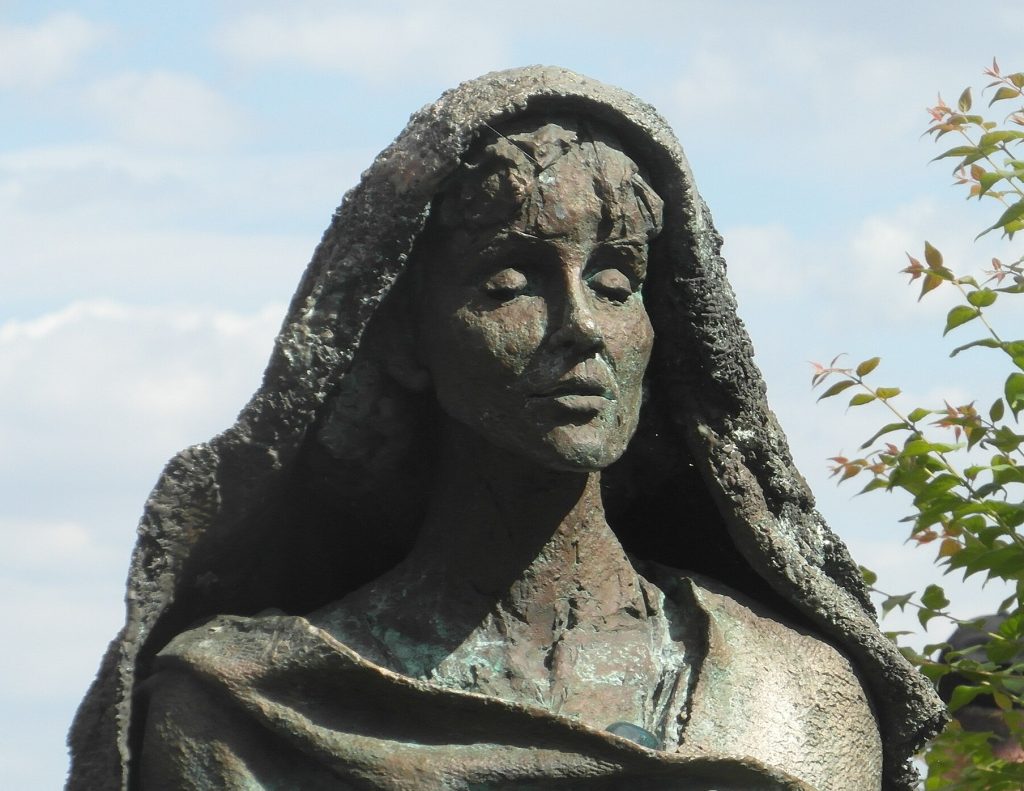
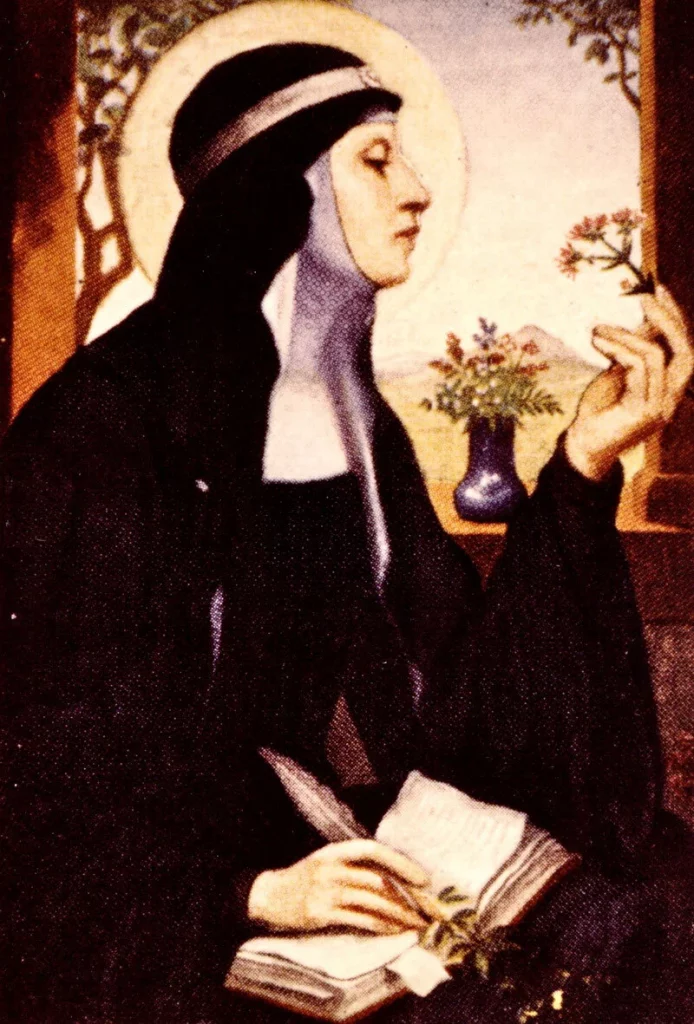
This month at Chambers Music Studio, our Composer of the Month scavenger hunt continues!
Each month, students will have the chance to search for a hidden photo of our featured composer somewhere around the studio. If a student finds the hidden composer photo, they can tell the front desk and receive a piece of candy.
Students may receive one prize per month. If a parent prefers no candy, students may choose a sticker instead.
This month’s featured composer is Hildegard von Bingen, a visionary 12th-century Benedictine abbess, writer, mystic, and composer who wrote some of the most soaring and expressive sacred vocal music of the Middle Ages.
Who Is Hildegard von Bingen?
Hildegard von Bingen was a German medieval Benedictine abbess, writer, polymath, and Christian mystic born in 1098 in Bermersheim, Germany. She was one of the earliest named female composers in Western music history whose works have survived to the present day.
From a young age, Hildegard experienced vivid spiritual visions, which she later recorded in illuminated manuscripts and expressed through poetry and music. She founded two monasteries in Germany and wrote extensively on theology, natural science, and medicine in addition to composing sacred music.
Her music is distinct from much of the plainchant written during her time. Instead of subtle, stepwise chants, Hildegard wrote expansive, dramatic melodies that leap high into the vocal register, creating music that feels luminous, otherworldly, and deeply spiritual.
Hildegard’s compositions were created strictly as sacred music—music composed specifically for religious worship and prayer within the monastery.
For Hildegard, music was not merely entertainment or art for art’s sake. She believed that singing was a divine gift that reconnected humanity with the harmony of heaven. Her sacred compositions were written to be sung during daily prayer services (the Divine Office) by the nuns in her monastery.
Because her texts were based on her own mystical poetry and visions, her music possesses an intensely personal and emotional quality. She often used vivid imagery of light, greenness (viriditas, or divine vitality), and nature to describe spiritual truths, wrapping her words in expansive vocal lines that sound almost like floating.
What Is Monophonic Texture?
One of the most important musical concepts in Hildegard’s music is monophonic texture.
In music, texture describes how different sounds and layers work together. Monophony (from the Greek words for “single voice”) means music that consists of a single melodic line without any underlying chords or independent harmonic accompaniment.
Even if several singers perform together, if they are all singing the exact same melody at the same pitch (or in octaves), the texture remains monophonic.
Why is monophony so powerful? Without complex harmonies or rhythm sections, every subtle inflection, breath, and leap in the melody stands out clearly.
Expressive freedom: Because monophonic plainchant did not use rigid time signatures, the rhythm moved naturally with the rhythm of the words and breath, allowing the singer to express deep emotion.
For music students accustomed to modern music—which usually relies on chords, basslines, and beats—listening to monophonic chant is a wonderful exercise in hearing the purity and expressive power of a single line of melody.
What Can Students Learn from Hildegard von Bingen?
Hildegard von Bingen’s life and music teach students that:
Melody alone can tell a powerful story: A single line of music does not need complex chords or heavy beats to be expressive.
Music is a path for creativity and expression: Hildegard used music to express her imagination, thoughts, and spiritual experiences.
Curiosity has no limits: In addition to music, Hildegard studied plants, science, and literature—showing that musicians can be curious about everything!
Your unique voice matters: Hildegard wrote in a style that was bold and different from other composers of her time.
Listening builds patience: Listening to unhurried, monophonic music helps us develop deep listening skills and appreciation for stillness.
At Chambers, we love helping students understand that music history is full of unique, pioneering figures who expanded what music could be. Hildegard von Bingen is a wonderful example of that tradition.
Find Hildegard von Bingen at the Studio!
This month, keep your eyes open around Chambers Music Studio.
Somewhere in the studio, there is a hidden photo of Hildegard von Bingen. If your student finds it, they can tell the front desk and receive a piece of candy or sticker.
We hope this monthly scavenger hunt helps students learn about important composers, musicians, and musical traditions in a fun and memorable way.
Happy searching!
Listen at Home!
Want to explore Hildegard von Bingen’s music together?