Your child has started showing an interest in music. Maybe they’re constantly singing around the house, pretending to play guitar, drumming on every available surface, or asking for a piano. You’re excited about encouraging that interest, but now comes a question many parents face: What instrument should my child learn first?
It’s tempting to choose an instrument based on your child’s latest obsession or the one you wish you had learned growing up. But choosing a starting point for music education involves more than picking an instrument. Your child’s age, developmental readiness, interests, and previous musical experiences can all help determine which learning environment will set them up for success.
At Chambers Music Studio, we believe the first step in music education should be about developing the skills children need to become confident, independent musicians. That’s why our Musical Pathway introduces children to different musical experiences as they grow, building a foundation that can support whichever instrument they eventually choose.
Does My Child's Age Matter When Choosing an Instrument?
Age isn’t the only factor in choosing an instrument, but it can help determine how children are best introduced to music. Young children learn differently from older children, and an educational approach that works beautifully for a 10-year-old may not be appropriate for a 3-year-old.
For our youngest musicians, ages 0–3, Music Time introduces musical concepts through purposeful singing, movement, listening, and rhythmic activities. Rather than focusing on mastering an instrument, children begin developing their sense of rhythm, awareness of pitch, coordination, and familiarity with musical patterns. These early experiences help prepare them for more structured musical learning as they grow.
Around ages 4–5, children can begin participating in more structured musical activities. Our Jam Band program builds on those early skills through singing, rhythm games, movement, and collaborative music-making. Students learn to recognize musical patterns, follow directions, listen to one another, and participate in an ensemble environment. They’re developing the fundamental skills that will be useful when they’re ready to begin learning an instrument in greater depth.
For many children ages 6–12, we recommend beginning with Piano Keys, our accelerated foundational piano program. Through a combination of teacher-led instruction, individualized learning, and independent practice, students develop their understanding of music reading, rhythm, technique, ear training, and music theory.
As students grow and develop their foundational skills, private lessons allow them to explore specific instruments in greater depth.
The important thing to remember is that a child’s first music program doesn’t have to focus exclusively on their eventual instrument. Early musical experiences can prepare them for success across a variety of instruments.
Why Do We Recommend Piano as a Starting Instrument?
If your 6-year-old announces that they want to learn guitar, you might be surprised when we recommend starting with piano instead. This is one of the most common questions we receive from families exploring music lessons.
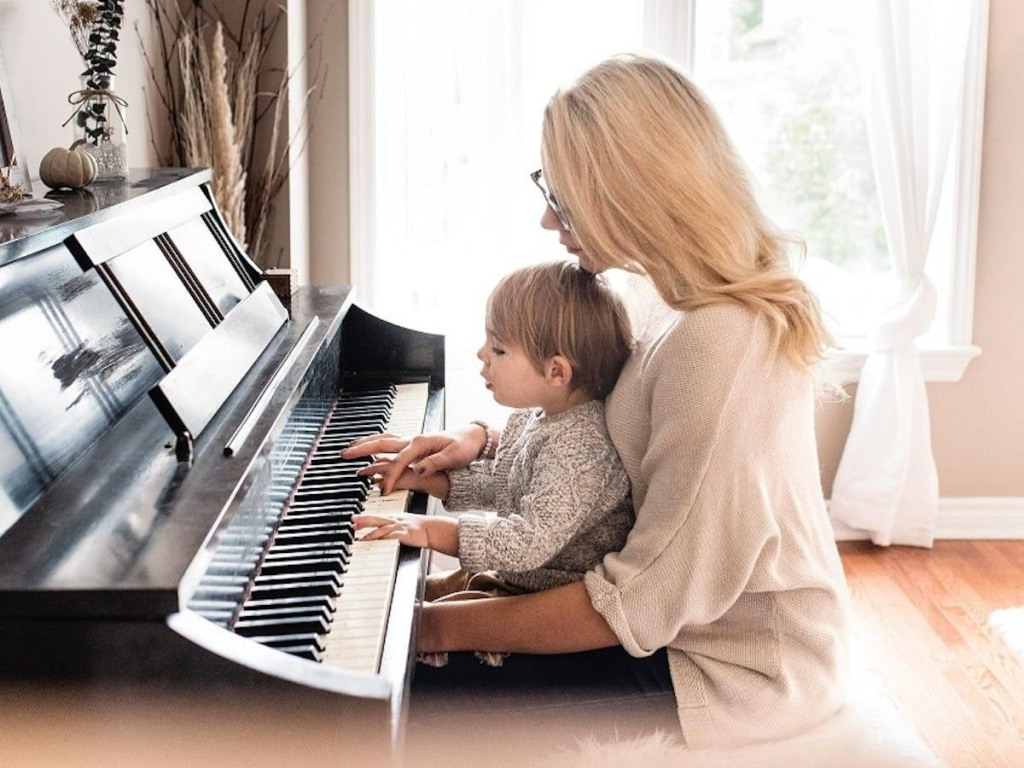
Piano offers several educational advantages for beginning musicians. Unlike many instruments, its notes are arranged in a visible, repeating pattern. Children can see the relationships between notes, identify musical patterns, and develop an understanding of how music is organized while simultaneously learning to play.
For example, a student learning about musical intervals can see the distance between two notes on the keyboard. As students begin reading music, they can connect the notes on the page with their corresponding positions on the piano. This visual relationship provides an accessible way to explore concepts that they’ll encounter throughout their musical education.
Learning piano also gives children opportunities to develop coordination, rhythmic accuracy, listening skills, and an understanding of harmony. These skills can transfer to other instruments, even though each instrument will eventually require its own specialized techniques.
This is why Piano Keys serves as a foundational program within the Chambers Musical Pathway. Rather than rushing students into an instrument-specific program before they’ve developed core musical skills, we help them build a foundation that supports their long-term goals.
What If My Child Is Only Interested in Guitar, Violin, or Drums?
A child’s enthusiasm for a particular instrument is valuable. After all, excitement about music can be an important source of motivation, especially when learning becomes challenging.
If your child has their heart set on guitar, violin, or drums, we want to encourage that interest while helping them develop the skills they’ll need to succeed.
Beginning with a foundational program doesn’t mean abandoning their preferred instrument. Instead, it means giving them an opportunity to develop musical literacy, rhythmic accuracy, listening skills, and other abilities that will support their future instruction.
At home, you can continue nurturing their interests by listening to musicians who play their favorite instrument, attending live performances, and encouraging them to explore different musical styles. When children understand how their current lessons connect to their long-term goals, they may be better able to appreciate the value of the foundational skills they’re learning.
For older beginners and students with previous musical experience, the appropriate starting point may be different. Our placement process takes each student’s age, interests, experience, and goals into account when recommending a program.
Should My Child Take Group or Private Music Lessons?
Another important consideration is the learning environment. Parents sometimes assume that private lessons must be the most effective way for a child to learn an instrument because the student receives the teacher’s undivided attention.
However, group instruction can offer educational opportunities that are particularly valuable for beginning musicians.
When children learn alongside other students, they can develop important skills such as listening, maintaining a steady beat, playing with others, and responding to musical cues. They also have opportunities to observe other students, share their accomplishments, and develop confidence in a collaborative environment.
In Piano Keys, students benefit from individualized instruction within a group learning environment. Teachers guide each student’s progress while students have opportunities to work independently, apply new concepts, and develop their musicianship.
As students advance, private lessons provide opportunities for more specialized instruction, technical development, and instrument-specific study.
The goal isn’t to determine whether group or private lessons are universally better. It’s to choose the learning environment that best supports a child’s current stage of development.
How Do I Know if My Child Is Ready to Start Music Lessons?
You don’t need to wait for your child to demonstrate extraordinary musical talent before introducing them to music education. Interest, curiosity, and a willingness to explore music are all valuable starting points.
For very young children, musical readiness may look like responding to songs, moving to a steady beat, imitating sounds, or enjoying musical interactions with a parent. Older children may begin demonstrating an interest in specific instruments, remembering melodies, recognizing patterns, or asking questions about how music works.
Every child develops at their own pace, and a developmentally appropriate music program should meet students where they are while introducing new skills as they’re ready.
Rather than asking whether your child is talented enough to begin music lessons, consider what type of musical experience will best support their current interests and developmental needs.
Your Child's First Instrument Is Just the Beginning
Choosing an instrument can feel like a big decision, but it doesn’t need to determine the rest of your child’s musical future.
At Chambers Music Studio, we view music education as a long-term developmental journey. Students begin by building foundational skills, gradually develop independence and musical literacy, and eventually explore increasingly advanced musical experiences.
Our Musical Pathway provides opportunities for children to progress from Music Time to Jam Band, Piano Keys, private lessons, ensembles, performances, and other advanced musical experiences.
Whether your child dreams of becoming a guitarist, pianist, vocalist, or orchestral musician, the most important first step is finding a program that helps them develop the skills, confidence, and enthusiasm to continue learning.
Find Your Child's Musical Starting Point
Not sure which music program is right for your child? Chambers Music Studio serves families throughout Bexley, Worthington, Columbus, and Central Ohio. Our placement process helps us learn about your child’s age, interests, experience, and goals so we can recommend an appropriate starting point.